

google reviews management houston

Google Reviews Management Houston
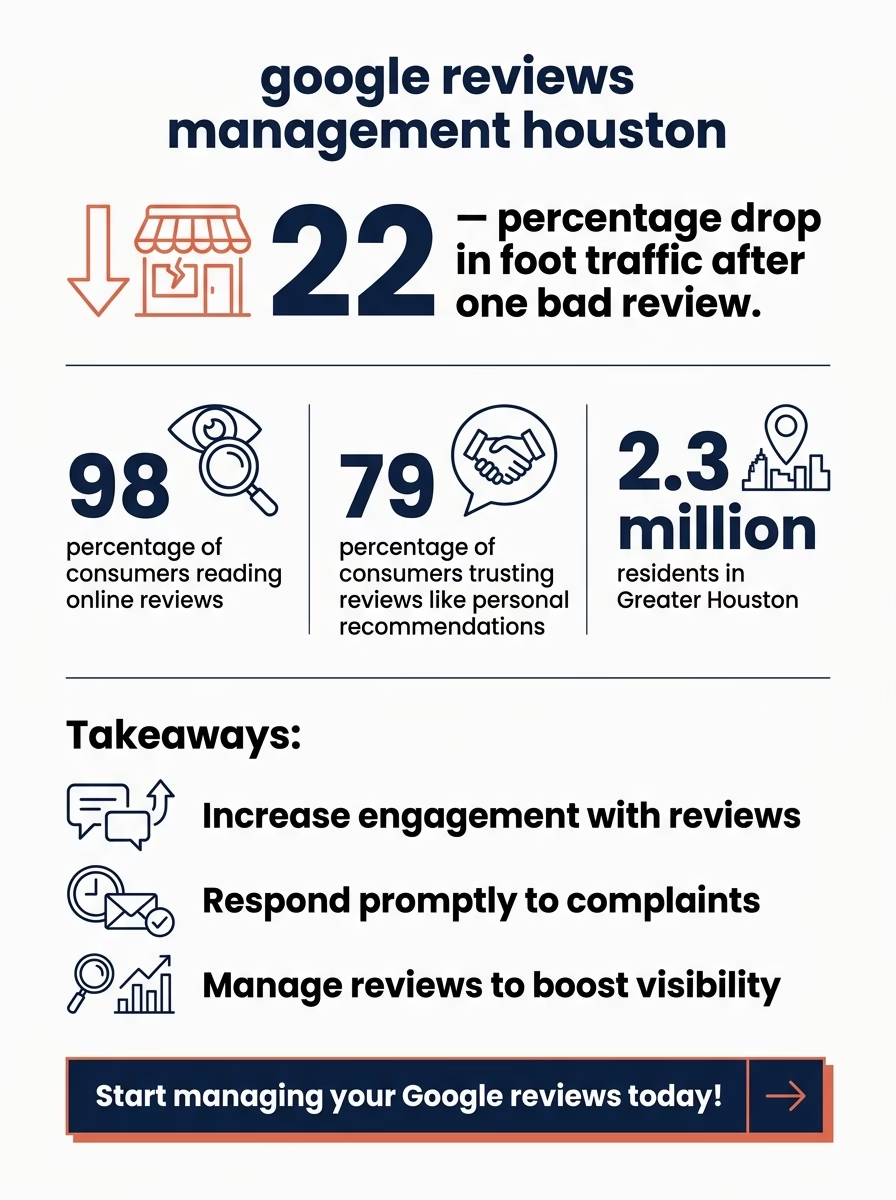
A single one-star review showed up on a Montrose coffee shop’s Google profile last Tuesday. By Thursday, foot traffic had dropped 22%. The owner hadn’t even noticed the review until her barista asked why the morning rush felt lighter. That’s the reality of online reputation in Houston—reviews move faster than traffic on the Katy Freeway, and they hit just as hard.
Your Google Business Profile isn’t just a digital listing anymore. It’s often the first—and sometimes only—impression potential customers get before deciding whether to walk through your door or call your number. In a metro area sprawling across Harris, Fort Bend, and Montgomery counties, managing that impression across dozens or hundreds of reviews becomes a full-time challenge.
According to research from BrightLocal’s 2023 survey, 98% of consumers read online reviews for local businesses, and 79% trust them as much as personal recommendations. Those numbers aren’t abstract—they represent real revenue walking past your competitor’s door instead of yours.

Why Houston Businesses Need Dedicated Review Management
Houston’s economy runs on variety. Energy companies share zip codes with Tex-Mex joints. Medical centers operate blocks away from auto repair shops. That diversity creates unique reputation challenges.
Consider the scale. Greater Houston hosts over 2.3 million residents and pulls in millions more for medical tourism at the Texas Medical Center alone. Each of those people can—and often does—leave reviews. When you’re competing with hundreds of similar businesses across a metro area that covers 10,000 square miles, a handful of neglected reviews can tank your local search rankings.
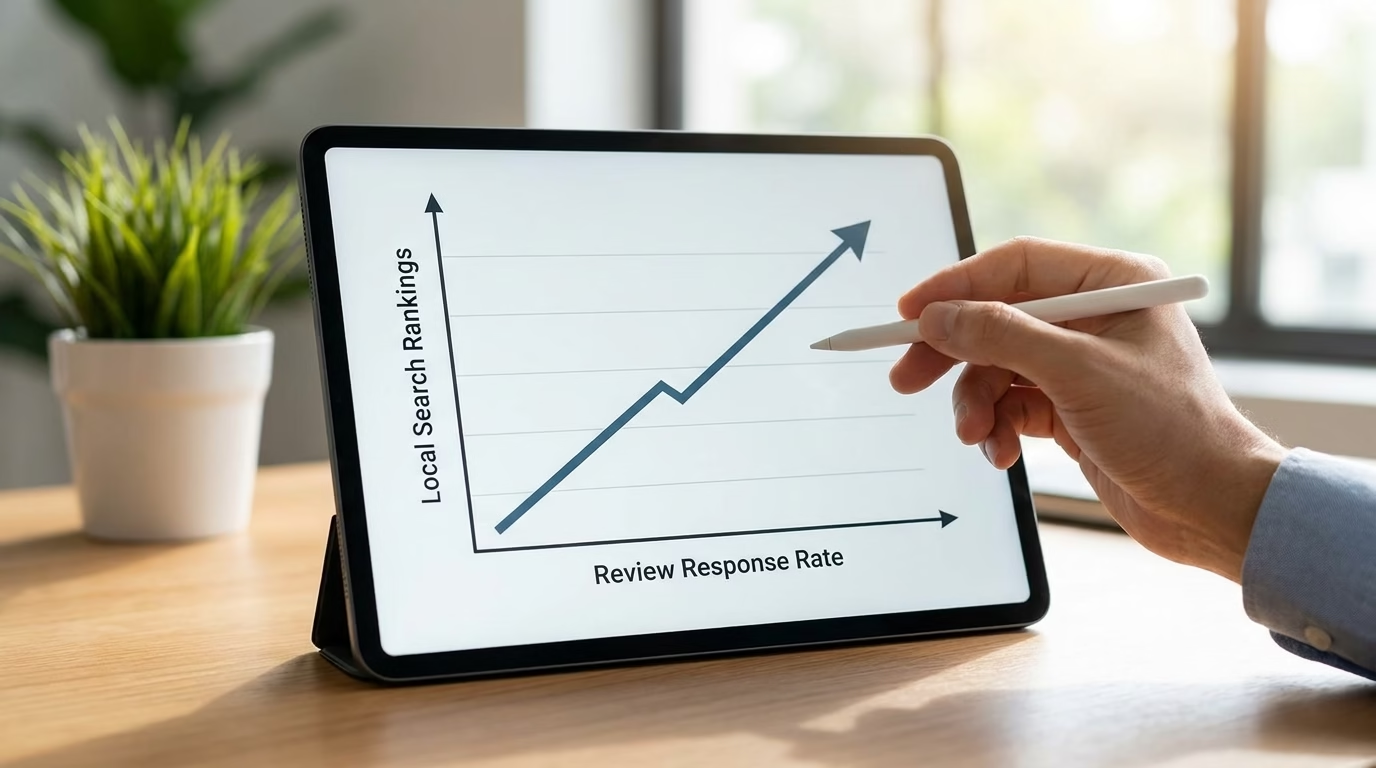
I’ve watched businesses in the Galleria area lose top-three map pack positions because they stopped responding to reviews for just two months. Google’s algorithm interprets silence as disengagement. Fresh, thoughtful responses signal that you’re active and care about customer experience.
The stakes get higher when you factor in industry-specific concerns. Medical practices face HIPAA constraints when responding. Restaurants deal with emotionally charged feedback about service or food safety. B2B companies in the Energy Corridor need to balance professional reputation with candid client feedback. Each sector demands its own approach to review management strategy.
The Cost of Ignoring Your Google Reviews
Unmanaged reviews don’t just sit there. They compound. A frustrated customer who gets no response often updates their review to complain about being ignored. That turns a recoverable three-star into a permanent one-star, complete with a narrative about poor customer service.
Search visibility suffers too. Google’s local ranking algorithm weighs review velocity, recency, and response rate. Businesses that consistently engage with reviews typically rank higher than those with better ratings but zero interaction.
What Effective Google Reviews Management Actually Looks Like
Forget the automated “Thanks for your review!” templates. Real review management requires context, speed, and strategy.
First, monitoring. You need alerts the moment a review posts—not weekly digest emails. Tools exist that ping you within minutes via text or Slack. For multi-location businesses across Houston’s various neighborhoods, centralized dashboards let you track feedback from Heights, Katy, Sugar Land, and Pearland locations simultaneously.
Response time matters more than most owners realize. Data from the Federal Reserve shows that customer engagement within 24 hours significantly improves sentiment recovery. In practical terms: answer quickly, and you can often turn a negative experience into a positive testimonial through the review thread itself.
Second, response quality. Generic replies feel robotic and can actually damage trust. Effective responses acknowledge specific details the reviewer mentioned, offer genuine solutions, and invite offline conversation when appropriate. A Memorial-area spa that recently improved its review management started personalizing every response with the service mentioned and the staff member’s name. Their average rating climbed 0.4 stars in three months.
Handling Negative Reviews Without Creating More Damage
Never argue in public. That rule deserves its own billboard on I-10.
When a review is factually wrong, your response should acknowledge the customer’s feelings while gently correcting misinformation. “I’m sorry you felt that way” goes further than “That’s not what happened.” Invite the conversation to email or phone where you can actually resolve the issue rather than performing conflict for future customers.
Some reviews violate Google’s policies—fake reviews, profanity, spam, or content posted by competitors. You can flag these through your Google Business Profile dashboard. The process isn’t instant, but legitimate violations usually get removed within a week. Document everything if a review seems suspicious.
Building a Sustainable Review Generation System
Here’s what doesn’t work: begging every customer for a five-star review. That approach creates review fatigue and sounds desperate.
Smart businesses build review requests into their natural workflow. A plumber finishes a job in Bellaire, and the invoice email includes a simple “How did we do?” link. A med spa in River Oaks sends a follow-up text 48 hours after a facial. Timing and context make the ask feel helpful rather than pushy.
The request itself should be neutral. Don’t say “Leave us a five-star review!” Google frowns on that, and it biases your feedback. Instead: “We’d love to hear about your experience.” Honest three- and four-star reviews with constructive criticism often convert better than a wall of perfect fives that look fake.
Physical prompts still work. QR codes on receipts, table tents, or window decals make it easy for satisfied customers to leave feedback while the experience is fresh. An auto shop in Spring started printing QR codes on repair orders and saw review volume triple in a month.
For companies working with professional SEO teams in Houston, review generation often ties into broader local SEO campaigns. Your Business Profile optimization, citation management, and review strategy should reinforce each other, not operate in silos.
Review Insights: Mining Data for Business Intelligence
Most business owners scan reviews for compliments and complaints, then move on. That’s like owning a goldmine and only picking up the nuggets on the surface.
Patterns in reviews reveal operational insights your staff might not report. If five reviews in two weeks mention “long wait times,” you’ve got a staffing or process issue. When multiple customers praise a specific employee, you know who deserves recognition or serves as a training model.
Keyword patterns matter for SEO, too. When customers repeatedly describe your restaurant as “best brunch in Midtown” or your HVAC company as “emergency AC repair Houston,” Google indexes those phrases in association with your business. That organic keyword placement often boosts visibility for those exact searches.
Competitive analysis adds another layer. You should monitor competitors’ reviews not to copy but to identify gaps. If customers complain about parking at every competitor in your area, and you have ample parking, that’s a differentiator to highlight in your responses and marketing.
When to Bring in Professional Google Reviews Management
DIY review management works for single-location businesses with moderate review volume—maybe up to 10-15 reviews monthly. Once you scale beyond that, or operate multiple locations, the time cost outweighs the savings.
Professional management makes sense when you’re dealing with reputation crises, competitive markets, or compliance-heavy industries. Marketing agencies specializing in local SEO, like Actual SEO Media, Inc., typically bundle review management with broader Google Business Profile optimization.
What should you expect from a professional service? Daily monitoring across all locations. Custom response drafts that maintain your brand voice. Review solicitation campaigns that comply with Google’s policies. Monthly reporting that tracks rating trends, response rates, and sentiment analysis. Some agencies even handle review gating (internal surveys that route happy customers to Google and unhappy ones to private feedback forms, though this practice exists in a gray area).
Cost structures vary. Some agencies charge per location, others by review volume. Monthly retainers in Houston typically range from $300 for basic management to $2,000+ for enterprise multi-location programs. The ROI calculation is straightforward: if better review management increases your conversion rate by even 2-3%, the revenue gain almost always exceeds the service cost.
Frequently Asked Questions
How quickly should I respond to Google reviews?
Aim for 24-48 hours maximum. Faster is better—reviews posted on Friday afternoon should get responses by Monday morning at the latest. Quick responses show current customers you’re attentive and signal to Google that your business profile is actively managed, which can improve local search rankings. If you can’t respond immediately to a complex negative review, post a brief acknowledgment within hours and follow up with a detailed response within a day.
Can I remove negative Google reviews from my business profile?
You can’t directly delete reviews, but you can flag ones that violate Google’s content policies—fake reviews, spam, off-topic rants, profanity, or content posted by competitors. Google reviews these flags and removes violations, though the process can take days or weeks. Legitimate negative reviews, even harsh ones, won’t be removed. Your best approach is a professional, solution-focused public response that shows future customers how you handle problems.
What’s the best way to ask customers for Google reviews?
Make it simple and timely. Send a follow-up email or text 24-48 hours after service with a direct link to your Google review page—don’t make customers hunt for it. Keep the request neutral (“We’d value your feedback”) rather than asking specifically for five stars, which violates Google’s guidelines. In-person requests work well too; train staff to mention it naturally during checkout: “If you have a moment later, we’d appreciate hearing about your experience on Google.”
Do review responses actually impact local SEO rankings?
Yes, they’re a confirmed ranking factor. Google’s local search algorithm considers review quantity, rating, recency, and response rate when determining map pack positions. Businesses that consistently respond to reviews typically rank higher than competitors with similar ratings but no engagement. Responses also provide keyword-rich content that Google indexes, help improve click-through rates by demonstrating active management, and increase the likelihood customers will leave future reviews—all factors that compound your local visibility over time.
Related: Highly Effective Marketing Services — Learn more about how this can grow your business.
Related: Power Up Best Online Marketing Companies Conroe, TX — See how we deliver results for clients like you.