

How to Rank on ChatGPT: SEO, AEO & GEO | Actual SEO Media

How to Rank on ChatGPT with SEO, AEO, and GEO
A client reached out last month frustrated that their brand wasn’t appearing when users asked ChatGPT about their industry. They’d invested years perfecting their Google rankings, only to discover they were invisible in AI-generated responses. This scenario reveals how to rank on ChatGPT with SEO, AEO, and GEO—three interconnected strategies that now determine visibility across search engines and AI platforms alike. The challenge is real: understanding how to make your content discoverable to both traditional search algorithms and AI systems requires a fundamentally different approach. You need to know how to keep your brand visible as the search landscape evolves. Welcome to the new battleground for visibility, where ranking success depends on optimizing for multiple discovery channels simultaneously.
Search is splitting into three fronts. Traditional search engine optimization (SEO) still matters for Google. Answer engine optimization (AEO) determines whether ChatGPT, Perplexity, or Claude mention your brand. Generative engine optimization (GEO) shapes how AI models synthesize and present information about your business. Understanding how to rank on ChatGPT with SEO, AEO, and GEO isn’t optional anymore—it’s survival.
According to recent data from Pew Research Center, 58% of Americans are now familiar with ChatGPT, and adoption is accelerating across demographics. That’s a massive audience getting answers without ever clicking a traditional search result.
Why Traditional SEO Isn’t Enough for AI Visibility
Here’s the uncomfortable truth: ranking #1 on Google doesn’t guarantee ChatGPT will cite you. AI models don’t crawl the web in real-time. They’re trained on massive datasets with knowledge cutoffs, then augmented with retrieval systems that prioritize different signals than PageRank.
SEO focuses on keywords, backlinks, and user engagement metrics. These matter. But large language models weight factors like content structure, citation density, authoritative source mentions, and semantic clarity differently. A perfectly optimized blog post for Google might be too keyword-focused and shallow for an AI model to consider authoritative.
I’ve watched businesses with stellar domain authority get ignored by ChatGPT while newer sites with clear, well-cited explanations get featured. The algorithm isn’t the same. Your content needs to speak both languages now.
That said, SEO forms your foundation. Professional SEO services ensure your content is discoverable, crawlable, and builds the authority signals that feed into broader AI training datasets. You can’t skip the fundamentals.
Understanding Answer Engine Optimization (AEO)
AEO is about becoming the source AI models quote when users ask questions. Think of it as optimizing for being cited, not just ranked.
ChatGPT and similar tools pull from high-credibility sources. They favor content that directly answers questions, provides clear definitions, includes statistics with citations, and demonstrates expertise. Generic marketing copy doesn’t cut it. You need substance.
Key AEO Strategies That Actually Work
Start with question-focused content architecture. Create dedicated pages or sections that answer specific queries your audience asks. Use natural language—how people actually phrase questions, not just keyword variations.
Structure matters enormously. Use proper heading hierarchies. Include concise summaries at the top of long articles. AI models parse structured data more effectively than walls of text. Lists, tables, and clearly delineated sections improve your chances of being extracted and cited.
Citations boost credibility. Link to authoritative sources. When you make claims, back them with data. AI models are more likely to reference content that itself references credible sources—it’s a trust cascade.
One overlooked tactic: FAQ sections using schema markup. These directly map to how users query conversational AI. When your FAQ answers match common questions, you’re building AEO equity.
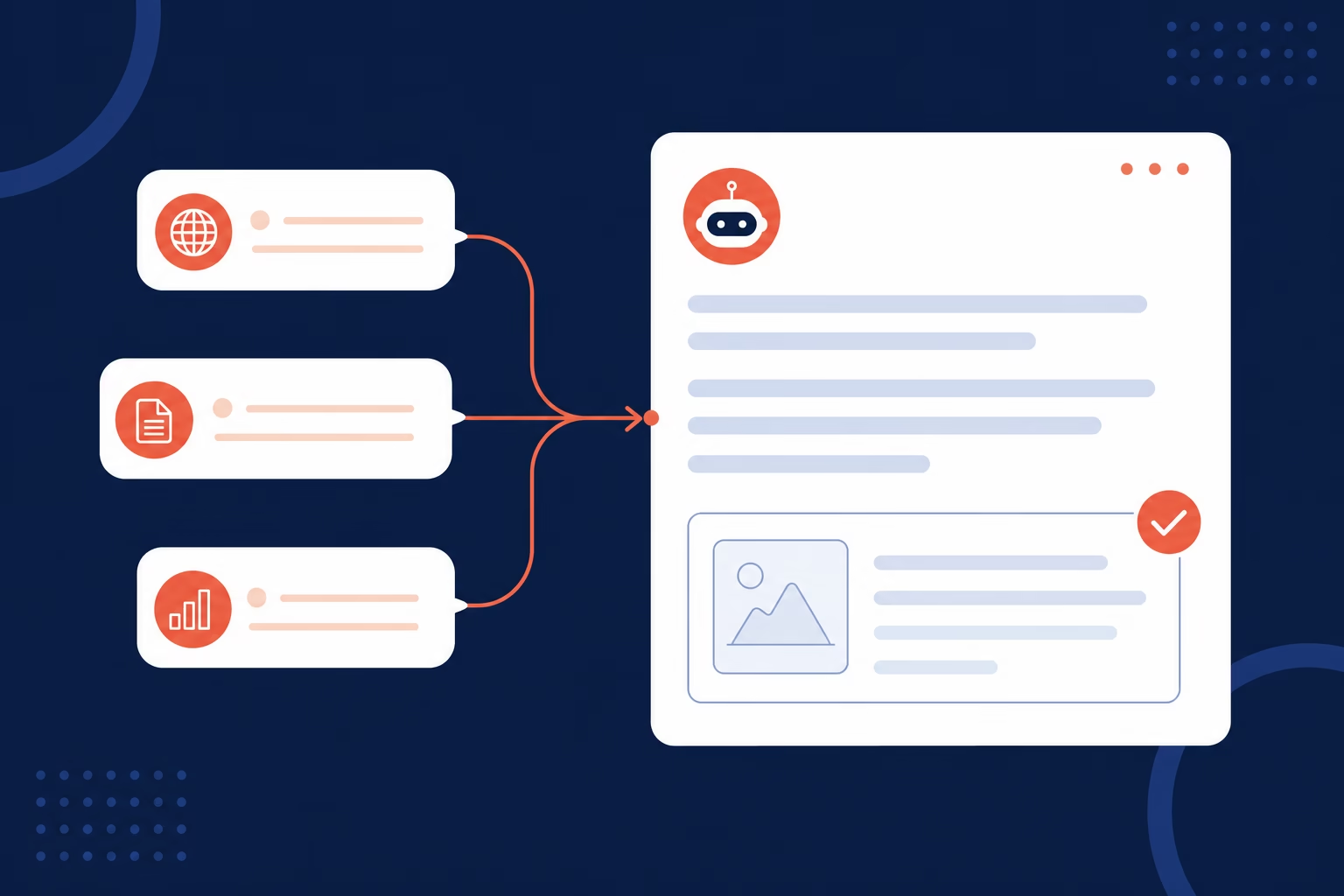
Mastering Generative Engine Optimization (GEO)
GEO takes AEO further. It’s not just about being cited—it’s about how AI models synthesize and present your information. Do they paraphrase accurately? Do they position you as an authority or just another source?
This requires thinking like a training dataset curator. Models favor content that’s comprehensive but concise, accurate with verifiable facts, and demonstrates clear expertise signals like author credentials, publication dates, and industry recognition.
Content Depth vs. Clarity
There’s tension here. SEO often rewards longer content. But AI models prioritize clarity and directness. The sweet spot? Comprehensive coverage broken into digestible, clearly labeled sections. Don’t pad word count. Every paragraph should earn its place.
Use topic clustering. Create pillar content on broad subjects, then link to detailed sub-topic pages. This architecture helps AI models understand your topical authority across related concepts. Strategic content development that builds these connections signals expertise at scale.
Brand Entity Recognition
AI models understand entities—people, places, organizations. If your brand appears consistently across authoritative sources with consistent information, models learn to recognize and cite you. This means brand consistency isn’t just marketing—it’s a technical requirement.
Maintain identical NAP (name, address, phone) information everywhere. Get mentioned in industry publications, case studies, and authoritative directories. Every consistent mention strengthens your entity profile in AI training data.

The Convergence Strategy: Integrating SEO, AEO, and GEO
You don’t choose one approach. They’re layered.
Start with solid technical SEO. Fast load times, mobile optimization, clean code, and crawlability remain essential. Search engines still drive discovery, and their indexes feed AI training pipelines. Without this base, you’re building on sand.
Layer in AEO by reformatting existing content. Take your best-performing pages and add clear question-answer structures. Include expert quotes with credentials. Add statistics with visible citations. You’re not creating new content necessarily—you’re making existing content more quotable.
Top it with GEO by establishing expertise signals. Author bios with credentials. Publication dates and update timestamps. Industry awards and recognition. Press mentions. These meta-signals tell AI models “this source knows what they’re talking about.”
A research study from arXiv examined generative search optimization. It found content combining structured data, authoritative citations, and clear expertise indicators performed better. This content appeared in AI-generated responses 3.2 times more frequently. Traditional SEO-only content appeared far less often.
Measuring Success Across All Three Fronts
Tracking traditional SEO is straightforward. Keyword rankings, organic traffic, click-through rates—tools exist everywhere.
Measuring AEO and GEO? Harder. There’s no Search Console for ChatGPT yet. But you can track brand mentions through AI queries. Regularly test relevant queries in ChatGPT, Claude, Perplexity, and Bing Chat. Document when and how your brand appears. Note whether you’re cited directly or mentioned in synthesized responses.
Monitor referral traffic from AI platforms. Some AI tools now link sources. Track these separately from traditional search to understand AI-driven discovery.
Watch for branded searches. When AI mentions you without a link, users often search your brand directly. A spike in branded search volume after being mentioned in AI responses indicates successful GEO.
Working with experts who understand these evolving metrics helps. Specialized teams can establish baseline measurements and track improvements across all three optimization fronts simultaneously.
Practical Steps to Start Ranking Today
Don’t wait for perfect clarity on AI algorithms. Start now with actions that build visibility across all three areas.
First, audit your top ten pages. Do they answer specific questions clearly? Add FAQ sections. Include statistics with sources. Make expertise visible through author credentials or case study details.
Second, clean up brand consistency. Google your business name. Everywhere it appears, ensure information matches exactly. Fix inconsistencies in directories, social profiles, and third-party mentions.
Third, create quotable content. Write one definitive guide per month on a core topic. Make it comprehensive, well-cited, and structured for easy extraction. Think Wikipedia-level clarity, not marketing fluff.
Fourth, earn authoritative mentions. Guest posts on industry sites, speaking engagements, podcast interviews—these create the distributed entity signals AI models recognize.
Fifth, test and iterate. Query AI tools monthly with questions your customers ask. Document results. Adjust content based on what’s working and what’s invisible.
The Road Ahead for AI Search Visibility
This field is moving fast. What works today might shift as AI models evolve. But the fundamentals won’t change: clear answers, verifiable expertise, and consistent brand presence win across platforms.
The businesses that win will treat AI visibility as seriously as they treated Google SEO a decade ago. That means dedicated resources, ongoing testing, and content strategies built for machine parsing and human value simultaneously.
Learning how to rank on ChatGPT with SEO, AEO, and GEO isn’t a weekend project. It’s a fundamental shift in how you approach content, authority-building, and brand consistency. The effort compounds. Every well-structured answer, every authoritative citation, every consistent brand mention builds equity across all three systems.
Start where you are. Fix the basics. Then build the layers that make your brand unmissable—whether someone’s searching Google or asking ChatGPT.
Frequently Asked Questions
What’s the main difference between SEO and AEO?
SEO optimizes for search engine rankings using keywords, backlinks, and engagement metrics to appear in traditional search results. AEO focuses on creating content that AI models cite when generating answers, prioritizing clear question-answer formats, authoritative citations, and structured data. While SEO aims for clicks, AEO aims for being quoted or referenced in AI-generated responses.
Can I rank on ChatGPT without good Google SEO?
Technically yes, but it’s harder. AI models often train on data that includes highly-ranked web content, so strong SEO indirectly feeds AEO and GEO. That said, newer authoritative content with clear structure and citations can get picked up by AI retrieval systems even without top Google rankings. The strategies work best together rather than in isolation.
How long does it take to see results from AEO efforts?
AI models don’t update their training data in real-time, so visibility changes can lag months behind content publication. However, retrieval-augmented generation systems used by some AI tools can surface newer content faster. Most businesses see measurable improvement in AI citations within 3-6 months of implementing structured, authoritative content strategies. Consistency matters more than speed.
Do I need different content for SEO versus AEO?
Not necessarily separate content, but you’ll need to enhance existing content. The same page can serve both purposes if it includes keyword optimization for SEO plus clear question-answer structures, citations, and expertise signals for AEO. Think of it as layering AEO elements onto your existing SEO-optimized content rather than creating entirely new assets. search engine optimization houston generative engine optimization houston seo houston