

local seo services

Local SEO Services: A Complete Guide to Growing Your Business in Your Community
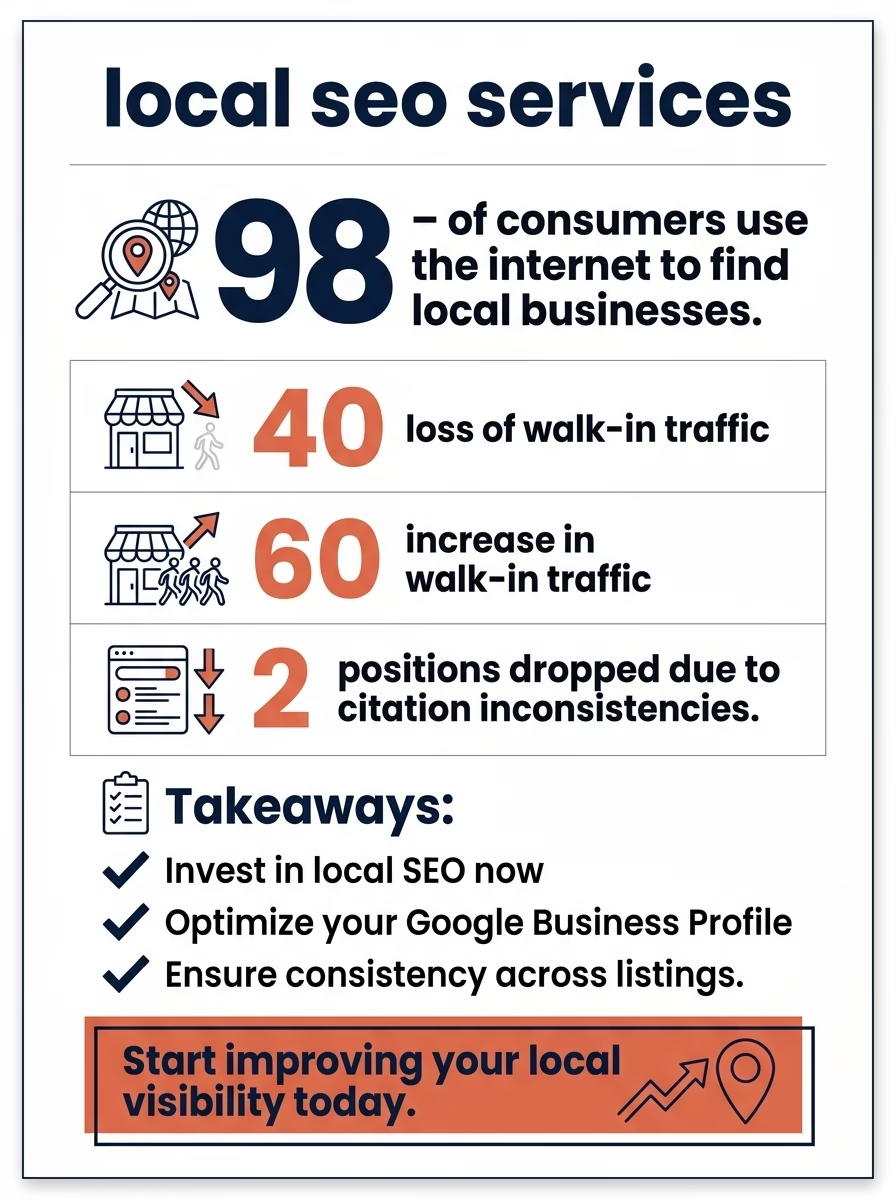
A bakery in Portland recently lost 40% of its walk-in traffic when a competitor opened three blocks away. The owner didn’t panic. She invested in local search optimization and recaptured that traffic within eight weeks—plus 60% more. That’s the power of local visibility done right.
Industry research from Statista shows that businesses using local SEO services often see measurable returns on investment within a year. For organizations considering these services, this statistic highlights the importance of basing decisions on independent benchmarks rather than just vendor promises. Pew Research has found a similar trend in related service categories, reinforcing that local SEO services can lead to ongoing benefits, especially when combined with trusted local expertise.
When someone searches for a service “near me” or mentions your city name, you’re competing in a completely different arena than traditional search. Studies show that 98% of consumers use the internet to find local businesses, and if you’re not showing up in those results, you’re invisible to the majority of your potential customers.
Local SEO services focus on making your business discoverable to people searching in your geographic area. It’s not just about ranking—it’s about showing up when intent is highest and the customer is ready to act.

What Makes Local SEO Different from Regular SEO?
Think of regular SEO as competing on a national stage. Local SEO? You’re the hometown favorite.
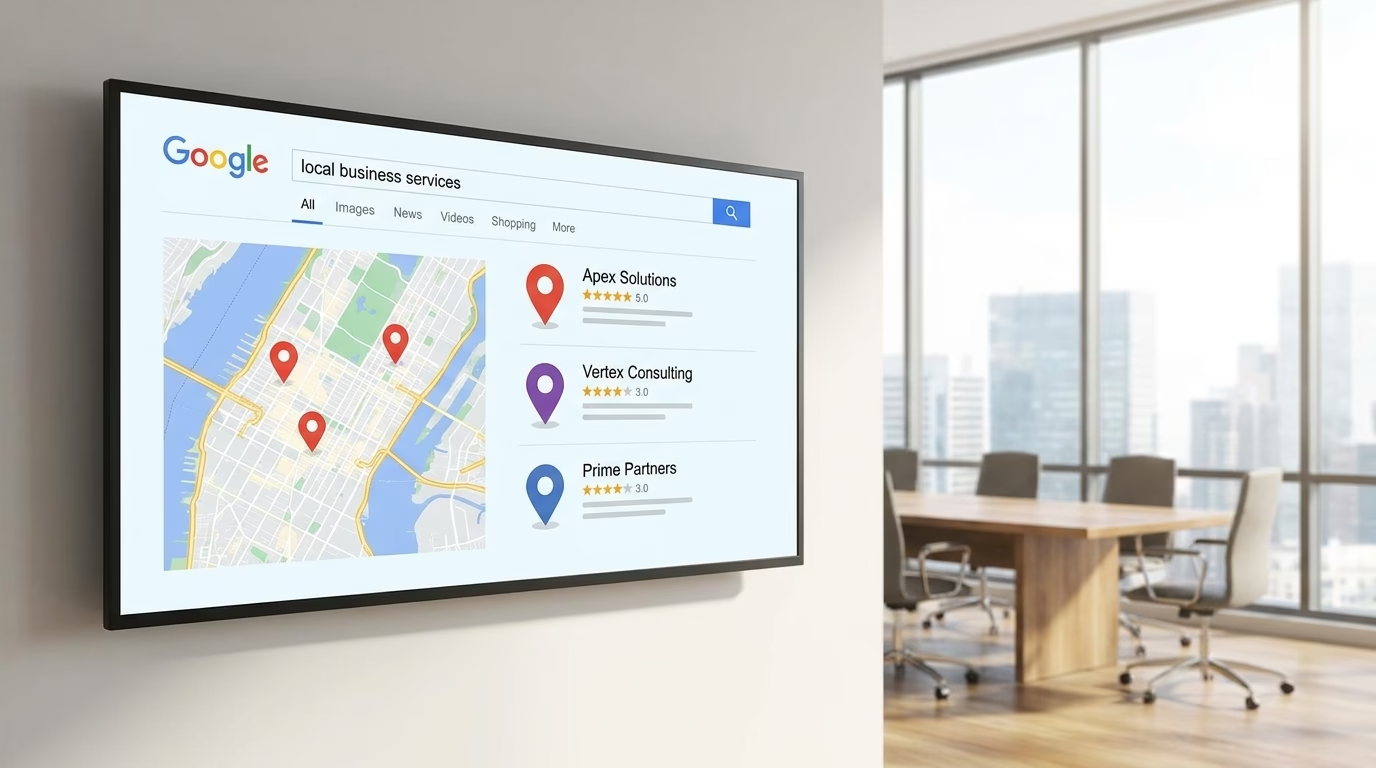
The algorithms prioritize proximity, relevance, and prominence in ways that standard organic rankings don’t. Google uses your business’s physical location, operating hours, reviews, and even the consistency of your contact information across the web to determine who appears in the Map Pack—those three businesses that show up above everything else.
Your competitors aren’t websites on the other side of the country. They’re the shop two streets over. And the ranking factors reflect that reality. Citations, Google Business Profile optimization, location-specific content, and review velocity matter far more than backlinks from high-authority domains.
The Google Business Profile Factor
Your Google Business Profile is the cornerstone. I’ve watched businesses jump from page three to the Map Pack just by completing every profile field, uploading weekly photos, and responding to every review. It sounds simple because it is—but most businesses skip it.
Categories, attributes, Q&A sections, posts—all of it feeds the algorithm. If you’re not treating your profile like prime real estate, you’re handing customers to someone who will.
Core Components of Professional Local SEO Services
A comprehensive approach includes several moving parts working in concert. Let’s break down what actually moves the needle.
Citation Building and NAP Consistency
NAP stands for Name, Address, Phone number. Every directory, listing, and mention of your business across the web needs to match exactly. Not “St.” in one place and “Street” in another. Not an old phone number lingering on a forgotten directory site from 2018.
Professional services audit hundreds of citation sources—Yelp, Yellow Pages, industry-specific directories, chamber of commerce listings—to ensure consistency. According to digital marketing strategists who’ve worked with local businesses for over a decade, citation inconsistencies can drop your rankings by two to three positions, which means the difference between visible and invisible.
Review Generation and Management
You need reviews. Recent ones. Regularly.
Google’s algorithm weighs review recency heavily. A business with 50 reviews from three years ago will lose to one with 20 reviews from the past three months. Quality matters, but so does momentum. Strategic review generation services create systems that make asking natural and compliant, not pushy or spammy.
On-Page Optimization for Local Queries
Your website needs to speak the language of local search. That means city names in title tags, service area pages for each neighborhood you serve, and schema markup that tells search engines exactly where you operate.
Location pages shouldn’t just be templates with swapped city names. They need unique content that reflects genuine knowledge of each area—local landmarks, neighborhood characteristics, specific customer needs in that community. Search engines can detect thin content instantly.
How Local SEO Services Drive Measurable Business Growth
Visibility translates to phone calls, foot traffic, and form submissions. But the impact goes deeper than surface metrics.
When you appear in the Map Pack, your click-through rate can hit 40-60%, compared to 2-5% for standard organic results. Users trust those local results. They’re ready to buy, not just browse.
I’ve seen HVAC companies triple their service calls in a single cooling season. Law firms that couldn’t compete with big-budget TV ads became the go-to choice in their metro area. The ROI is direct and trackable because local search captures high-intent customers at the exact moment they need you.
Competitive Displacement
Here’s what most guides won’t tell you: local SEO is often about taking spots away from competitors who’ve gotten lazy. If the businesses currently ranking haven’t updated their profiles in months, haven’t responded to reviews, or still have their 2019 holiday hours listed, you can outrank them in weeks.
Your gains are frequently their losses. The Map Pack only shows three businesses for most searches. Aggressive optimization pushes someone out, and that someone might be the competitor who’s dominated for years simply because nobody challenged them.
Choosing the Right Local SEO Services Provider
Not all services are created equal. Some agencies treat local SEO as an afterthought, a minor add-on to their standard packages.
Ask about their citation network. Do they manually verify listings or just blast your information to low-quality directories? Can they show you a sample local content strategy for a business in your industry? Do they have direct relationships with Google Business Profile support for issues that require escalation?
The Federal Trade Commission provides guidelines on legitimate business listing practices, and reputable providers follow them strictly. Anyone promising overnight Map Pack rankings or guaranteed #1 positions is selling fantasy.
Transparency matters. You should receive monthly reports showing keyword rankings, citation progress, review acquisition, and competitor comparisons. If they can’t show you exactly what they’re doing and what’s working, walk away.
Red Flags to Avoid
Watch out for providers who stuff your business into irrelevant categories, create fake reviews, or use geographic keywords that don’t match your actual service area. Short-term gains from black-hat tactics turn into long-term penalties that can obliterate your visibility.
Also, be skeptical of rigid packages that don’t adapt to your market. A dentist in a town of 15,000 has different needs than a restaurant in downtown Chicago. Your local SEO services plan should reflect your specific competitive environment.
Building a Long-Term Local Search Strategy
One-and-done doesn’t work. Local search is dynamic—competitors adjust, algorithms update, and customer behavior shifts.
The businesses that maintain top positions treat local SEO as ongoing infrastructure, not a project with an end date. They publish regular Google posts, add new photos monthly, launch landing pages for seasonal services, and stay active in community events that generate backlinks and citations.
Content strategy matters too. Blog posts answering location-specific questions, case studies featuring local clients, and guides to neighborhood resources all build topical authority while incorporating the geographic signals that algorithms reward.
Measuring What Matters
Track Map Pack positions for your core service terms in each city you serve. Monitor direction requests, phone calls, and website visits from Google Business Profile. Watch review quantity and average rating trends month over month.
But also pay attention to business outcomes. How many new customers came from local search? What’s their lifetime value compared to other channels? That’s where robust analytics integration separates good services from great ones.
Frequently Asked Questions
How long does it take to see results from local SEO services?
Most businesses notice movement within four to eight weeks for low-competition keywords and less competitive markets. Map Pack positions typically shift within two to three months if the optimization is comprehensive and consistent. Highly competitive urban markets might take four to six months to break into top positions. The timeline depends on your starting point, competition density, and how aggressively you address citation gaps and review acquisition.
Do I need local SEO if I already have a website?
Absolutely. Your website handles organic search, but local SEO optimizes for geographic queries and the Map Pack, which appears above organic results. Someone searching “plumber near me” will see the Map Pack first—three businesses with ratings, directions, and call buttons. If you’re not there, you’re missing the highest-intent traffic. Your website and local presence work together, but they’re optimized through different tactics and serve different search behaviors.
Can I do local SEO myself or do I need professional services?
You can handle basics—claiming your Google Business Profile, ensuring consistent contact information, asking customers for reviews. But professional services bring specialized tools for citation audits across hundreds of directories, competitor analysis, schema implementation, and reputation monitoring. They also stay current with algorithm changes. If you’re in a competitive market or serve multiple locations, the time investment to do it right usually exceeds what most business owners can manage while running their operations.
How much do local SEO services typically cost?
Pricing varies widely based on market competitiveness and scope. Single-location businesses might pay $500-$1,500 monthly for comprehensive services. Multi-location businesses often pay $1,500-$5,000+ depending on the number of locations and service complexity. One-time setup projects for citation building and profile optimization can range from $1,000-$3,000. Avoid extremely cheap services—quality citation work, content creation, and ongoing optimization require significant labor. Compare cost against the value of new customers you’ll gain from improved visibility.
Related: Employ Top-Tier Internet Marketing Specialist Conroe, TX — See how we deliver results for clients like you.
Related: Use Local Digital Marketing — Learn more about how this can grow your business.
Related: Website Marketing Companies Conroe, TX – Get Noticed Online — Read our full guide on this service.