

shopify seo houston
Shopify SEO Houston
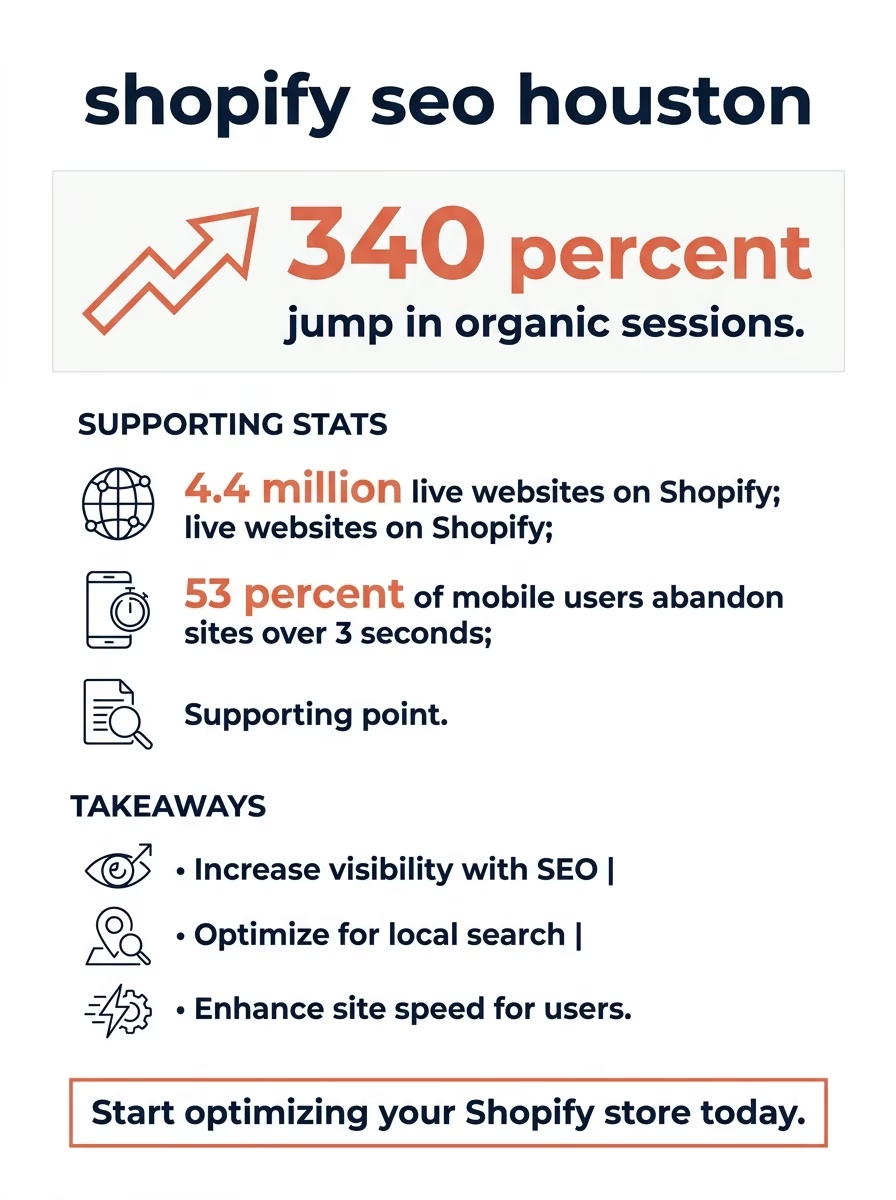
A Houston boutique selling handmade leather goods launched their Shopify store in early 2023. Traffic was almost nonexistent. Three months later, after targeted SEO work, they ranked on page one for “custom leather wallets Houston” and saw a 340% jump in organic sessions. That’s not magic—it’s methodical Shopify SEO done right in a competitive metro market.
Houston’s e-commerce scene is thriving, but standing out on Shopify requires more than picking a nice theme and uploading products. You need search-engine optimization tailored to both Shopify’s platform quirks and Houston’s local search behavior. Let’s break down exactly how that works.
Why Shopify SEO Matters for Houston Businesses
Shopify powers over 4.4 million live websites globally, according to Shopify’s State of Commerce report. That’s a lot of competition. If your Houston store isn’t optimized, you’re invisible—even if your products are exceptional.
Houston is the fourth-largest city in the U.S., with a massive digital market. Local shoppers search for everything from BBQ rubs to custom furniture online before they buy. If you’re not ranking when they type “buy X in Houston” or “Houston X store,” you’ve already lost the sale to a competitor who invested in SEO.
Shopify’s structure is SEO-friendly out of the box, but it’s not automatic. You’ll need to optimize product pages, collections, meta tags, site speed, and local signals. That’s where specialized expertise comes in.
Technical SEO Challenges Unique to Shopify
Shopify has constraints that don’t exist on WordPress or custom platforms. You can’t edit your robots.txt file freely. URL structures are somewhat rigid. Duplicate content can creep in through collection pages, tags, and product variants.
Here’s a concrete example: Shopify automatically generates /collections/all, /products, and paginated URLs. If you don’t canonical-tag these correctly, Google indexes dozens of thin or duplicate pages, diluting your ranking power. I’ve seen Houston stores with 200+ indexed pages when they only had 30 real products. That’s a red flag.
Site speed is another hurdle. Shopify themes often ship with bloated JavaScript and oversized images. According to research from Google’s Think with Google, 53% of mobile users abandon sites that take longer than three seconds to load. Houston shoppers on the 610 Loop during lunch aren’t waiting around.
Common Technical Fixes
- Compress images with tools like TinyPNG or Shopify apps such as Image Optimizer.
- Use lazy loading for below-the-fold content.
- Audit and consolidate duplicate meta descriptions across collection pages.
- Implement structured data (Product, BreadcrumbList, Organization) via JSON-LD.
- Check mobile usability in Google Search Console and fix any flagged issues.
Working with a team experienced in Shopify’s backend—like Actual SEO Media, Inc.—means you won’t waste months discovering these quirks the hard way.
Local SEO Integration for Houston Shopify Stores
If you operate a physical storefront or serve the Houston area specifically, local SEO is non-negotiable. Even pure online shops benefit from geo-targeting when customers search “near me” or include “Houston” in queries.
Start with a verified Google Business Profile. Link it to your Shopify domain. Add your NAP (Name, Address, Phone) consistently across your site footer, contact page, and any apps that display location info. Use schema markup to tell Google you’re a LocalBusiness or Store.
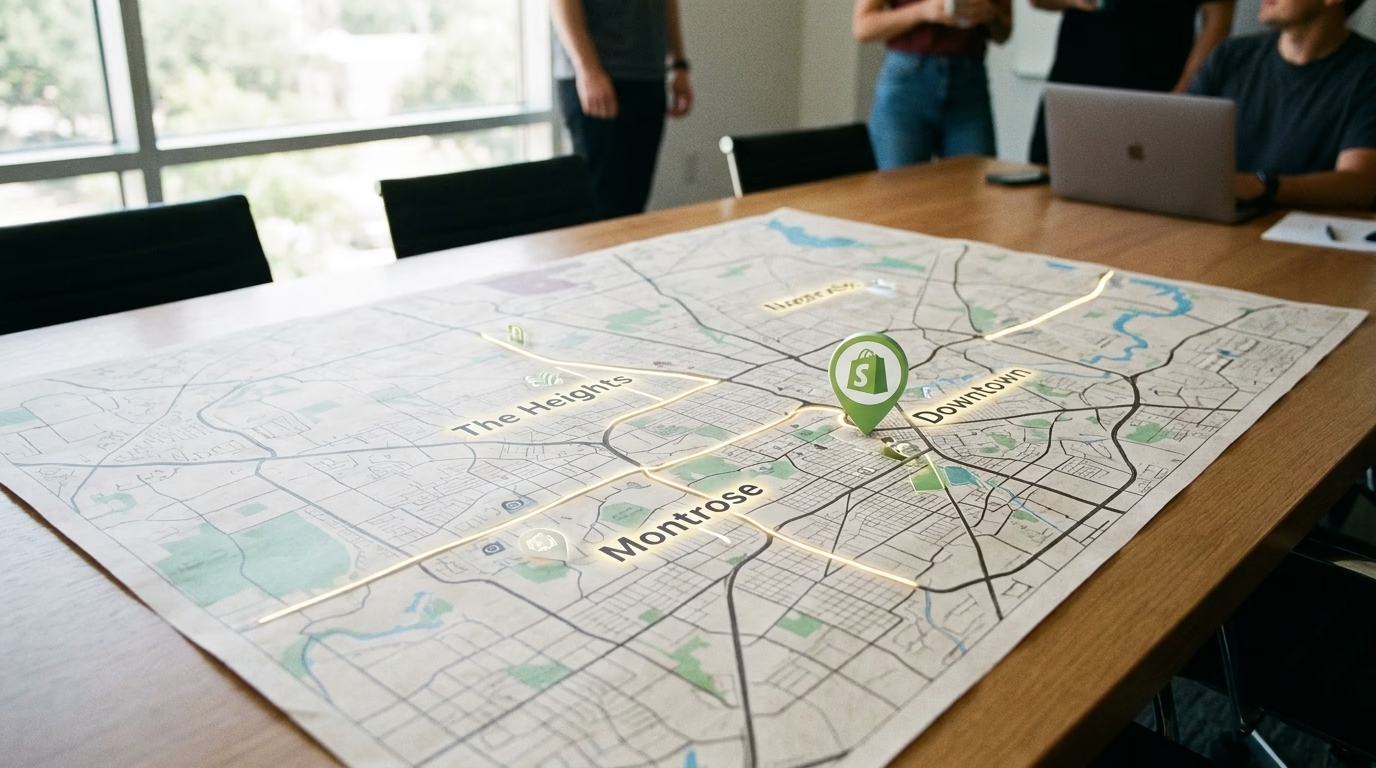
Houston neighborhoods matter. Montrose, The Heights, Midtown, and the Energy Corridor all have distinct demographics and search patterns. If you sell home décor, mentioning “serving Montrose and The Heights” on a collection page can pull in hyper-local traffic that converts at a higher rate.
Hyperlocal Content Tips
- Write blog posts about Houston-specific events, holidays, or trends tied to your products.
- Create landing pages for each neighborhood or ZIP code you serve.
- Encourage customer reviews that mention Houston or specific areas.
- Partner with other Houston businesses for backlinks and co-marketing.
You don’t need a massive content calendar. Two well-researched, locally focused blog posts per month will outperform ten generic product announcements every time.
On-Page Optimization: Products, Collections, and Content
Your product pages are the front line. Each one should have a unique title tag, meta description, and at least 150 words of original description. Don’t copy-paste manufacturer blurbs—Google penalizes duplicate content, and shoppers won’t connect with robotic text.
Use your target keyword naturally. If you sell custom cowboy boots, a product title like “Handcrafted Leather Cowboy Boots | Houston Made” is far better than “Product #12345.” Weave synonyms and related terms into your descriptions: “Western boots,” “artisan footwear,” “Texas-style,” and so on.
Collections are powerful for SEO because they let you rank for category keywords. A collection page titled “Men’s Athletic Shoes in Houston” with a 200-word intro, filters, and internal links to related products can rank for dozens of long-tail queries.
Blogging on Shopify is underutilized. You’ve got a built-in blog module—use it. Write how-to guides, product comparisons, and local stories. Link internally to products and collections. Each post is another indexed page, another chance to rank, another opportunity to answer a question someone typed into Google.
Content Checklist
- Unique meta title and description for every page
- Alt text for all images (descriptive, keyword-aware, not stuffed)
- Headings (H2, H3) that structure content logically
- Internal links between related products, collections, and blog posts
- Schema markup for products, reviews, and FAQs
If writing isn’t your strength, partner with a Houston SEO agency that understands e-commerce. Actual SEO Media, Inc. has worked with dozens of Shopify stores, crafting content that ranks and converts.
Link Building and Off-Page Signals in Houston
On-page is half the equation. Off-page—primarily backlinks—tells Google your site is trustworthy and relevant. For a Houston Shopify store, local backlinks carry extra weight.
Think beyond generic directories. Get listed in Houston-specific resources: the Greater Houston Partnership, local chambers of commerce, neighborhood associations, and industry groups. Sponsor a local event or charity and ask for a link. Guest-post on Houston lifestyle blogs or business publications.
Press coverage is gold. If you launch a new product line or hit a milestone, pitch it to the Houston Chronicle, CultureMap Houston, or Houstonia Magazine. One authoritative link from a major publication can boost your domain authority significantly.
Don’t ignore social signals. While not a direct ranking factor, social shares drive traffic, which signals relevance. A post that goes semi-viral on Houston Reddit or Instagram can send hundreds of visits and earn natural backlinks.
Ethical Link-Building Tactics
- Guest articles on local or niche blogs
- Partnerships with complementary Houston businesses
- Testimonials for vendors or suppliers (with a link back)
- Sponsorships of community events or nonprofits
- HARO (Help a Reporter Out) responses for journalist queries
Avoid shady link farms or paid link schemes. Google’s algorithms are sophisticated, and penalties can tank your rankings overnight.
Measuring Success and Iterating
SEO isn’t set-it-and-forget-it. You need to track metrics, analyze what’s working, and adjust. Google Analytics and Google Search Console are your baseline tools—both free and essential.
Watch organic traffic, bounce rate, average session duration, and conversion rate by landing page. If a product page ranks well but doesn’t convert, the issue might be price, photos, or copy—not SEO. If a blog post drives traffic but visitors leave immediately, the content might not match search intent.
Track keyword rankings weekly. Tools like Ahrefs, SEMrush, or Moz let you monitor where you stand for “shopify seo houston” and related terms. If you’re stuck on page two, dig into why: are competitors’ pages longer, faster, or better linked?
Set quarterly goals. Maybe it’s moving five target keywords into the top ten, earning ten new backlinks, or increasing organic traffic by 25%. Document what you did and the results. That historical data becomes your playbook.
Tools Worth Using
- Google Search Console: Monitor indexing, errors, and search queries.
- Screaming Frog: Crawl your Shopify site for technical issues.
- PageSpeed Insights: Identify speed bottlenecks.
- SEMrush or Ahrefs: Keyword research, backlink analysis, competitor audits.
- Hotjar or Crazy Egg: Heatmaps to see how users interact with your pages.
If this feels overwhelming, you’re not alone. Most store owners would rather focus on inventory and customer service. That’s exactly why agencies like Actual SEO Media, Inc. exist—to handle the technical heavy lifting while you run your business.
Why Work with a Houston-Based SEO Agency
You could hire a remote freelancer or a national firm. But a Houston-based agency understands the local market in ways outsiders don’t. They know which neighborhoods are booming, which keywords Houstonians actually use, and how to tap into local networks for backlinks and press.
They’re also in your time zone, available for face-to-face meetings, and invested in the Houston business community. When you work with Actual SEO Media, Inc., you’re partnering with a team that’s optimized sites for everything from oil-and-gas suppliers to boutique fashion brands right here in Houston.
Experience matters. An agency that’s navigated Shopify’s platform updates, Google’s algorithm shifts, and Houston’s competitive verticals will save you time, money, and frustration. You’ll see results faster and avoid costly mistakes.
Getting Started with Shopify SEO in Houston
Ready to move? Start with an audit. Crawl your site, review your analytics, and list every technical issue, content gap, and missed opportunity. Prioritize quick wins—fixing broken links, compressing images, writing meta descriptions—then tackle bigger projects like content creation and link building.
Set realistic timelines. SEO takes three to six months to show meaningful results. You won’t rank #1 overnight, but you will see incremental gains: more impressions, higher click-through rates, better positions for long-tail keywords.
If DIY isn’t feasible, reach out to a proven Houston SEO partner. Book a consultation, share your goals, and get a custom strategy. The investment pays for itself when organic traffic replaces paid ads and your store becomes the go-to name in your niche.
Frequently Asked Questions
What is Shopify SEO and why does it matter for Houston businesses?
Shopify SEO is the process of optimizing your Shopify store so it ranks higher in search engine results. For Houston businesses, this means more local customers finding your products when they search terms like “buy handmade jewelry Houston” or “Houston coffee subscription.” Without SEO, your store is invisible to the thousands of potential buyers searching every day. It’s especially important in a competitive market like Houston, where dozens of stores might sell similar products.
How long does it take to see results from Shopify SEO?
Most businesses see initial movement—more impressions, a few keyword jumps—within four to eight weeks. Significant traffic increases and page-one rankings typically take three to six months of consistent work. Factors include your site’s current state, competition level, and how aggressively you optimize. Quick wins like fixing technical errors show up faster, while link building and content creation compound over time. Patience and steady effort beat sporadic bursts every time.
Can I do Shopify SEO myself or should I hire an agency?
You can handle basics—writing product descriptions, adding alt text, installing SEO apps—but technical issues, link building, and strategy require expertise. If you’re comfortable learning and have time, DIY is possible. Most store owners find that hiring an agency saves time and delivers faster, better results. A Houston-based team also brings local market knowledge and connections you can’t replicate on your own. Weigh your bandwidth against the cost of missed opportunities.
What’s the difference between local SEO and regular Shopify SEO?
Regular Shopify SEO focuses on ranking for product and category keywords nationally. Local SEO targets geo-specific queries like “Shopify store Houston” or “buy organic skincare Montrose.” It involves optimizing your Google Business Profile, building local citations, earning backlinks from Houston sites, and creating location-focused content. If you serve Houston customers—online or in-store—local SEO should be part of your strategy. The two work together to maximize visibility across all search types.
Related: Web Design And Marketing Dickinson, TX – Design That Sells — See how we deliver results for clients like you.
Related: Pay Per Click Services Dickinson, TX Guide 2025 — Read our full guide on this service.
Related: Marketing Firm Conroe TX Grow Your Business — Read our full guide on this service.
Related: Google Search SEO Conroe, TX – Tips Traffic Boosts — Read our full guide on this service.