

shopify seo houston

Shopify SEO Houston
A Houston boutique owner relaunched her Shopify store in March 2023. Traffic flatlined for three months. The problem? She’d migrated from WordPress without redirecting a single URL. Her Google rankings vanished overnight. This scenario plays out more often than you’d think, especially for small e-commerce businesses racing to get online without a local expert in their corner.
Houston’s e-commerce scene is booming. But building a beautiful Shopify store won’t bring customers if nobody can find it. That’s where specialized search engine optimization comes in—tailored not just for Shopify’s unique platform architecture, but for the competitive Houston market.
Why Houston E-Commerce Needs a Local SEO Approach
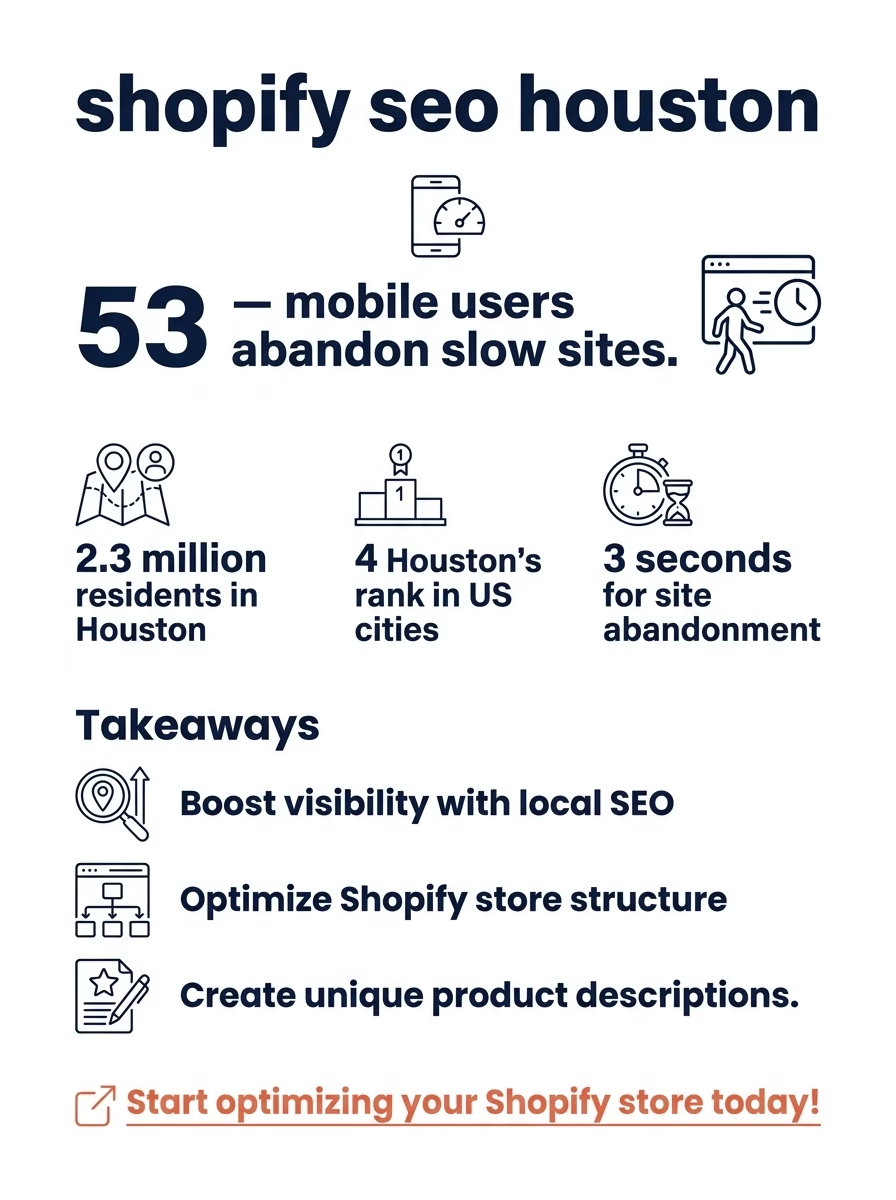
Houston isn’t just big. It’s the fourth-largest city in the United States, with over 2.3 million residents and a sprawling metropolitan area that stretches across multiple counties. Your potential customers are searching with local intent—”buy handmade jewelry Houston” or “organic skincare near me.” Generic, one-size-fits-all SEO tactics miss those hyper-local opportunities.
Shopify stores face particular challenges. The platform’s structure is fantastic for quick launches and clean design, but it can be tricky for search engines to crawl properly. Duplicate content issues arise with product variants. URLs often lack customization. Site speed suffers when store owners pile on apps without understanding the performance cost. According to research from Semrush, 53% of mobile users abandon sites that take longer than three seconds to load—a critical stat when you’re competing for Houston shoppers on the go.

How Shopify SEO Houston Differs from Standard SEO
Not all SEO is created equal. Shopify requires platform-specific knowledge that a generalist digital marketer might not have. You’re working within a closed system with certain limitations—but also powerful built-in features if you know where to look.
Technical Foundation Matters First
Start with the bones. Shopify’s theme code directly impacts crawlability. Liquid template tags need proper schema markup for products, reviews, and breadcrumbs. Your robots.txt file and XML sitemap are auto-generated, but they’re not always optimized for your specific catalog structure. I’ve audited Houston Shopify stores with hundreds of pages indexed that should’ve been excluded—filtered search results, customer account pages, cart URLs—all eating up precious crawl budget.
The SEO professionals at Actual SEO Media, Inc. work directly with Shopify’s API and metafield system to solve these issues without breaking themes. It’s technical work that pays off when Google finally indexes your best-selling products instead of your cart page.
Content Strategy for Product Pages
Here’s a secret: most Shopify stores use manufacturer descriptions. Copy-paste. That’s duplicate content, and Google hates it. Your Houston customers need to know why your products matter to them. Write original descriptions. Include local use cases. A camping gear store? Reference Sam Houston National Forest or Galveston beach trips. Selling formal wear? Mention Houston Livestock Show and Rodeo season or wedding venues in the Heights.
Product page titles should follow a consistent, keyword-rich pattern. Don’t just write “Blue Dress.” Try “Sapphire Cocktail Dress for Houston Weddings | [Your Brand].” Small changes compound.
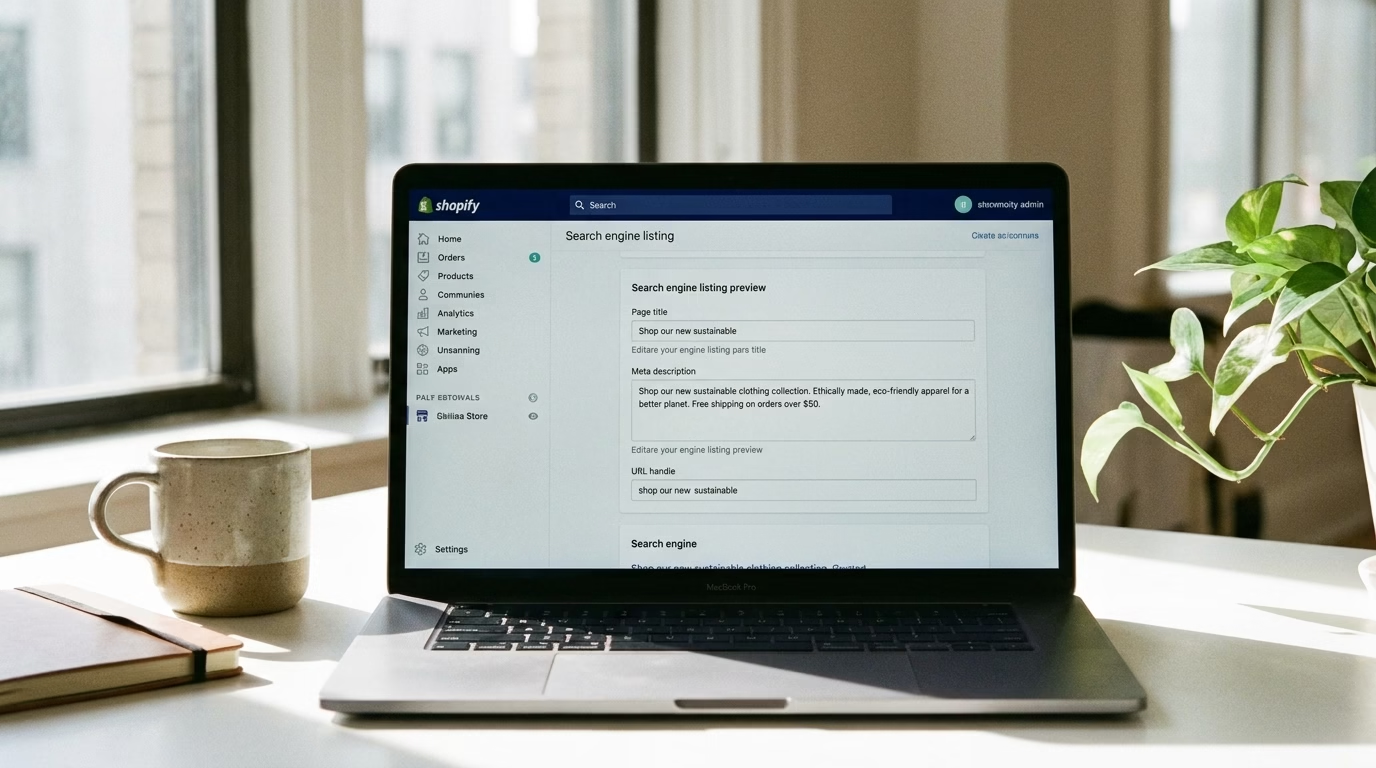
Local Search Signals That Boost Houston Shopify Rankings
Google prioritizes proximity. Even for e-commerce. When someone in Montrose searches for your product category, Google checks if you have local signals—a Houston address, local backlinks, consistent NAP (name, address, phone) citations across directories.
Set up Google Business Profile if you have a physical location or operate from a home office (use a service area instead of displaying your home address). Link it to your Shopify store. Encourage customers to leave reviews mentioning Houston or their neighborhood. These signals tell Google you’re relevant to local searchers.
Build relationships with Houston bloggers, news outlets, and business directories. A backlink from the Houston Chronicle or a local lifestyle blog carries weight. The team at Actual SEO Media, Inc. has cultivated relationships with Houston media for years, which helps clients earn legitimate local citations that move the needle.
Mobile Optimization Is Non-Negotiable
Texas leads the nation in mobile commerce. Research from the U.S. Census Bureau shows that e-commerce sales represented 15.6% of total retail sales in Q2 2023, and mobile accounts for more than half of that traffic. If your Shopify theme isn’t lightning-fast on mobile, you’re losing money every single day.
Test your site on actual devices, not just Chrome’s inspector tool. How quickly do product images load on a 5G connection in the Galleria? Can users easily tap size and color options without zooming? Is your checkout process frictionless on a small screen?
Shopify’s default themes are mobile-responsive, but customizations often break that responsiveness. Apps add JavaScript that blocks rendering. Third-party tracking pixels slow everything down. An experienced Houston SEO team audits every element and removes bloat ruthlessly.
Core Web Vitals for Shopify
Google’s Core Web Vitals—Largest Contentful Paint, First Input Delay, Cumulative Layout Shift—directly impact rankings. Shopify stores struggle with LCP when hero images aren’t optimized. Use next-gen formats like WebP. Lazy-load images below the fold. Defer non-critical JavaScript.
These technical tweaks require developer-level access. You can’t just flip a switch in Shopify’s admin panel. That’s why working with specialists who understand both SEO and Shopify’s codebase makes a measurable difference.
Content Marketing That Drives Houston Traffic
Your blog isn’t just for show. It’s your long-term traffic engine. Write guides, how-tos, and local resources that answer real questions your Houston customers are asking.
Selling fitness equipment? Publish “Best Outdoor Workout Spots in Houston” or “Home Gym Setup for Small Houston Apartments.” Selling baby products? Try “Houston New Parent Resources: Classes, Pediatricians, and Playgroups.” These posts target long-tail keywords with clear local intent. They attract links naturally. And they position your store as a helpful community resource, not just a sales machine.
Consistency matters more than perfection. One well-researched post per month beats five rushed articles. Include images, videos, and links to related products. Use internal linking to guide readers from blog posts to relevant collections.
Measuring Success and Adjusting Strategy
SEO isn’t set-it-and-forget-it. You need data. Shopify’s built-in analytics show traffic sources and top-performing products, but you’ll want Google Analytics 4 and Search Console for deeper insights.
Track organic sessions, bounce rate, conversion rate by channel, and keyword rankings for your target terms. Are Houston-specific keywords climbing? Is blog content bringing in new visitors who convert? Which product pages need stronger calls-to-action?
Review performance monthly. SEO changes take time—usually 3-6 months before you see significant ranking improvements. But you should spot early wins within weeks: better crawl rates, indexed pages increasing, and long-tail keywords starting to rank.
An experienced Houston SEO partner brings transparency to this process. They’ll show you exactly what’s working and where budget should shift. No smoke and mirrors.
Finding the Right Shopify SEO Houston Partner
You could try to DIY your Shopify SEO. Install an app. Read some blog posts. But SEO has gotten complex—especially for e-commerce. Algorithm updates roll out constantly. Competitors are hiring professionals. The cost of trial-and-error usually exceeds the investment in expert help from day one.
Look for a Houston-based team with proven Shopify experience. Ask for case studies. Check their own site’s rankings (if they can’t rank themselves, that’s a red flag). Make sure they communicate clearly and set realistic timelines. Avoid anyone promising “page one in 30 days.” That’s not how this works.
A good agency will audit your current site, identify quick wins, and build a six-month roadmap. They’ll integrate SEO with your broader marketing—email campaigns, social media, paid ads—so everything works together instead of fighting for budget.
When your Houston Shopify store finally starts showing up on page one for terms your ideal customers are searching, you’ll understand why SEO is an investment, not an expense. Organic traffic compounds. It’s the gift that keeps giving, month after month, without paying for every single click.
Frequently Asked Questions
How long does Shopify SEO take to show results in Houston?
Most Shopify stores see initial improvements in 8-12 weeks, with significant ranking gains around the 4-6 month mark. Houston is competitive for many niches, so patience matters. Quick technical fixes—like improving site speed and fixing broken links—can improve user experience immediately, but organic rankings take time to climb. Consistent content creation and link building accelerate the timeline.
Can I do Shopify SEO myself, or do I need an agency?
You can handle basic on-page optimization yourself—writing meta descriptions, optimizing product titles, and creating blog content. But technical SEO, schema markup, site speed optimization, and link building require specialized knowledge. Many Houston Shopify store owners find the best approach is learning the basics while partnering with experts for advanced tactics that demand experience and tools.
What’s the biggest Shopify SEO mistake Houston stores make?
Neglecting technical SEO. Store owners focus on pretty design and product photos but ignore crawl errors, duplicate content from product variants, slow loading times, and missing schema markup. These technical issues prevent Google from properly indexing and ranking your store, no matter how good your products are. A comprehensive technical audit should be your first step before any other SEO work.
Does Shopify SEO work differently than WordPress SEO?
Yes. Shopify’s closed platform limits direct access to server settings and code. You can’t install every SEO plugin like you can on WordPress. URL structures are less flexible. However, Shopify handles many technical elements automatically—SSL certificates, mobile responsiveness, and hosting speed. The key is working within Shopify’s framework and using apps wisely without slowing down your site or creating conflicts.
Related: Effective Solutions Digital Agency Near Me Conroe, TX — See how we deliver results for clients like you.
Related: Remarkable Search Engine Optimization — Learn more about how this can grow your business.
Related: SEO Service Provider Conroe, TX – Maximize Content’s Impact — Read our full guide on this service.