

website optimization texas

Website Optimization Texas: Your Complete Guide to Driving Real Results Online
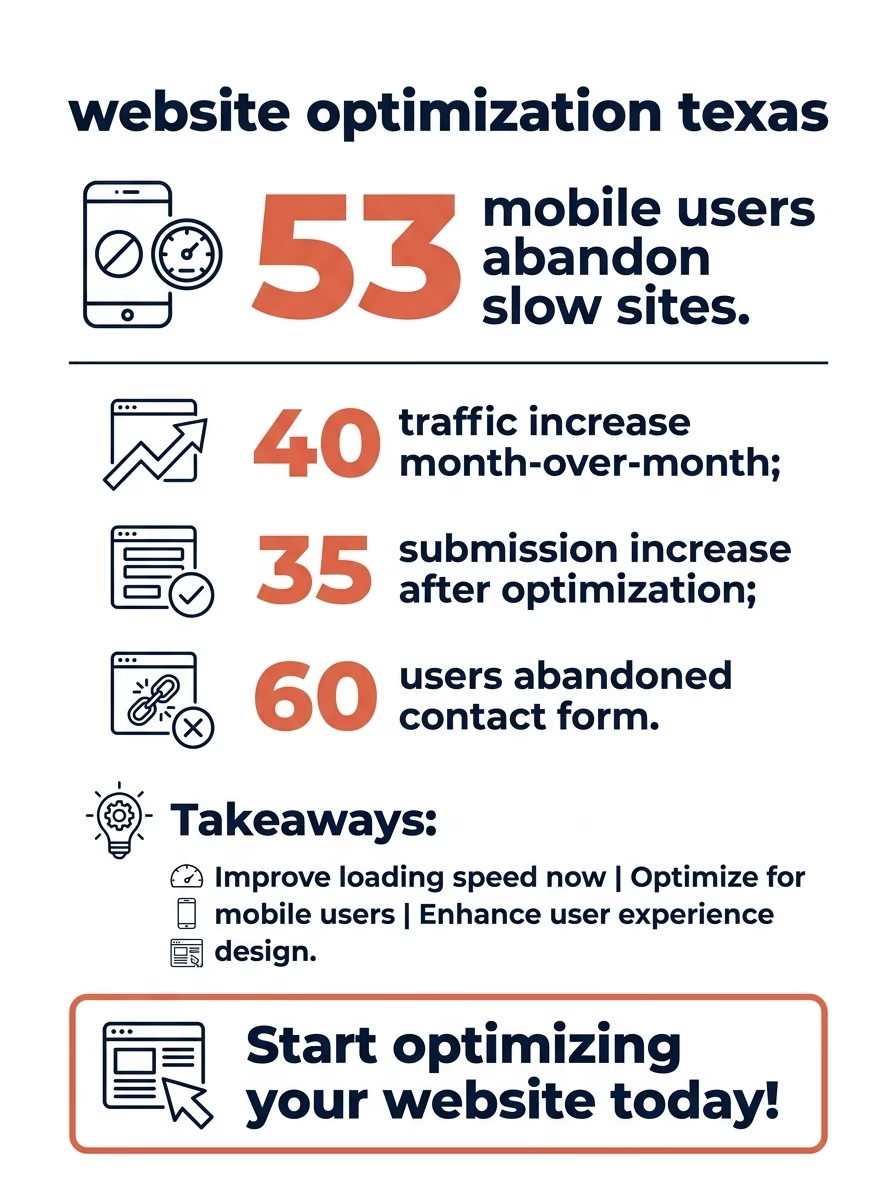
A Dallas-based coffee roaster noticed something odd last March. Traffic climbed 40% month-over-month, but sales stayed flat. The culprit? A lightning-fast homepage that ground to a halt on the product pages. Speed, structure, and strategy—all three have to align, or your site becomes a digital ghost town.
Website optimization isn’t a one-and-done checklist. It’s the continuous process of improving how your site performs for both visitors and search engines. In Texas, where competition spans oil and gas firms in Midland, tech startups in Austin, and retail chains across Houston, standing still means falling behind.
This guide walks you through the core pillars of website optimization texas businesses rely on to convert clicks into customers. You’ll find actionable tactics, real-world examples, and the metrics that matter most.
Why Texas Businesses Can’t Ignore Site Performance
Google’s algorithm updates have made page experience a ranking factor since 2021. According to Google’s own documentation, Core Web Vitals—loading speed, interactivity, and visual stability—directly influence where you land in search results. That means a sluggish site costs you visibility before a single visitor ever arrives.
Texas companies face unique challenges. Summer heat drives HVAC searches to peak in June, flooding local service providers with mobile traffic. If your site takes more than three seconds to load on a smartphone, 53% of mobile users will abandon it, per research from Google. That’s half your potential leads gone before they see your homepage.

I’ve watched San Antonio e-commerce shops lose thousands in revenue because checkout pages weren’t optimized for mobile Safari. Small friction points—a form that won’t autofill, a button that shifts on tap—add up fast. The fix often takes less than a day, but the impact lasts months.
Core Elements of Effective Website Optimization in Texas
Optimization breaks down into three buckets: technical health, content relevance, and user experience. Let’s unpack each one.
Technical SEO Foundations
Your server response time, XML sitemap accuracy, and crawl budget all sit under this umbrella. Tools like Google Search Console flag issues—broken links, duplicate title tags, mobile usability errors. Fix these first. They’re the plumbing. Without solid infrastructure, everything else leaks.
Hosting matters more than most realize. A server in California adds latency for Houston visitors. Consider a content delivery network (CDN) or a Texas-based host if your audience is regional. Milliseconds compound when you’re competing for local searches like “plumber near me” or “Fort Worth web design.”
On-Page Content Strategy
Keywords still matter, but context beats repetition. Instead of stuffing “website optimization texas” into every paragraph, structure your content around user intent. Someone searching that phrase wants to know how optimization works, what it costs, and who can help. Answer those questions clearly, and search engines reward you.
Internal linking ties your pages together. If you publish a blog post on local SEO tactics, link to your main SEO services page. This spreads authority across your site and keeps visitors engaged longer—another ranking signal Google tracks.
User Experience (UX) and Conversion Rate Optimization
Heat maps reveal where users click, scroll, and rage-click. I once analyzed a law firm’s contact form and discovered 60% of users abandoned it at the “Tell us about your case” field. Too open-ended. We replaced it with a dropdown menu, and submissions jumped 35% in two weeks.
Navigation should be intuitive. If visitors can’t find your pricing or contact info within two clicks, you’ve lost them. Test your site on actual devices—an iPhone 12 in Safari, a Samsung Galaxy in Chrome, an older iPad. Emulators miss real-world quirks.

Local SEO and Texas Market Considerations
Texas spans 268,596 square miles. A strategy that works in El Paso won’t necessarily fit Beaumont. Local optimization means claiming and optimizing your Google Business Profile, earning citations in Texas-specific directories, and tailoring content to regional search behavior.
For example, “AC repair” peaks in May across the state, but “heater repair” surges in December—even in South Texas. Seasonal content calendars aligned with local weather patterns, events (think SXSW in Austin or the Houston Rodeo), and economic cycles keep your site relevant year-round.
Schema markup helps search engines understand your location data. Mark up your NAP (name, address, phone number) with LocalBusiness schema, and you’re more likely to appear in the map pack—the three local results that show up above organic listings. That real estate is gold for service-area businesses.
Measuring Success: Metrics That Actually Matter
Vanity metrics—total page views, bounce rate averages—don’t pay the bills. Focus on conversion rate, goal completions, and revenue per session. If you run an e-commerce site, track average order value and cart abandonment rate. For lead-gen businesses, measure form submissions and phone calls attributed to organic search.
Core Web Vitals deserve their own dashboard. Largest Contentful Paint (LCP) should stay under 2.5 seconds. First Input Delay (FID) under 100 milliseconds. Cumulative Layout Shift (CLS) below 0.1. Tools like PageSpeed Insights and Lighthouse give you these numbers; your developer translates them into fixes.
A/B testing uncovers what resonates. Change one variable at a time—headline copy, CTA button color, image placement—and let data decide. I’ve seen a single headline tweak lift click-through rates by 18%. Small changes, big outcomes.
How Actual SEO Media, Inc. Approaches Website Optimization
At Actual SEO Media, Inc., the process starts with a comprehensive audit. We analyze technical health, content gaps, backlink profiles, and competitor positioning. Then we prioritize fixes by impact and effort—quick wins first, long-term projects second.
Our team includes web developers, content strategists, and conversion specialists. That cross-functional approach ensures optimization isn’t siloed. A fast site with weak content won’t convert. Great content on a broken site won’t rank. Everything has to work together.
We also track progress transparently. Monthly reports break down rankings, traffic sources, and conversion paths. You’ll see which pages drive leads, which keywords gained traction, and where opportunities still exist. No jargon, no smoke and mirrors—just clear data and next steps.
Common Pitfalls to Avoid in Website Optimization
Chasing algorithm updates is a losing game. Google rolls out changes constantly; trying to game each one leaves you reactive and scattered. Build for users first. If your site loads fast, answers questions clearly, and earns links naturally, you’ll weather algorithmic shifts.
Ignoring mobile is no longer an option. According to U.S. Census Bureau data, over 85% of Americans now own a smartphone. In Texas, mobile searches for local services often happen on the go—someone driving through Austin needs a taco spot now, not later. If your site isn’t mobile-friendly, you’re invisible to that searcher.
Over-optimization is real. Keyword stuffing, thin content, and manipulative link schemes trigger penalties. I’ve seen companies tank their rankings overnight by buying backlinks from shady directories. Recovery takes months. Stick to ethical, sustainable tactics.
Next Steps for Texas Businesses Ready to Optimize
Start with a baseline. Run your site through Google’s PageSpeed Insights and Search Console. Identify the top three issues—maybe it’s image compression, maybe it’s missing meta descriptions. Fix those before tackling anything else.
Content audits come next. List every page on your site and ask: Does this serve a clear purpose? Is the information current? Would I share this with a friend? Delete, update, or consolidate pages that don’t pass the test. Quality beats quantity every time.
If you’re ready for expert help, reach out to Actual SEO Media, Inc.. We’ll walk you through a free site assessment and show you exactly where the biggest opportunities lie. No pressure, no hard sell—just honest feedback from pros who’ve optimized hundreds of sites across Texas.
Frequently Asked Questions
What does website optimization include?
Website optimization covers technical improvements (page speed, mobile responsiveness, crawlability), on-page SEO (keyword targeting, meta tags, internal linking), content quality, and user-experience enhancements like streamlined navigation and conversion-focused design. It’s an ongoing process that adapts to algorithm updates, user behavior shifts, and business goals. Most businesses see measurable results within three to six months when optimization is done consistently and strategically.
How much does website optimization cost in Texas?
Pricing varies widely based on site size, industry, and scope. A basic audit and initial fixes might run $1,500–$3,000 for a small business site. Ongoing monthly optimization—technical maintenance, content updates, performance monitoring—typically ranges from $1,000 to $5,000 per month. E-commerce sites and enterprise-level projects cost more due to complexity. Always ask for a detailed proposal that breaks down deliverables so you know exactly what you’re paying for.
Why is local SEO important for Texas businesses?
Texas is the second-largest state by population, with diverse regional markets. Local SEO ensures your business appears in “near me” searches and Google’s map pack, which drives foot traffic and service calls. Optimizing your Google Business Profile, earning local citations, and creating location-specific content help you capture customers who are ready to buy right now. For service-area businesses—HVAC, legal, medical—local visibility often matters more than national rankings.
How long does it take to see results from website optimization?
Most businesses notice improvements within four to twelve weeks, though timelines depend on starting point and competition level. Technical fixes like speeding up load times can boost rankings quickly, sometimes within days. Content and link-building strategies take longer—usually three to six months—because search engines need time to crawl, index, and evaluate changes. Patience pays off. Sustainable growth beats short-term spikes every time.
Related: B2B Website Design Conroe TX Convert More — Read our full guide on this service.