

How to Make Your Website AEO-Optimized | Actual SEO Media

How to Make Your Website AEO-Optimized
Answer Engine Optimization isn’t just a buzzword—it’s quietly reshaping how people find information online. While you’ve spent years perfecting your SEO strategy, voice assistants, AI chatbots, and answer boxes now serve direct responses without requiring users to click through to your site. A Gartner study predicts search engine volume will drop 25% by 2026 due to AI chatbots and virtual agents. That’s a massive shift.
For the wider picture, see our guide on how to rank on ChatGPT with SEO, AEO, and GEO.
So how do you adapt? Making your website AEO-friendly means structuring content so machines can parse, understand, and quote it accurately. It’s different from traditional search optimization—and it requires a fresh approach.

What Makes AEO Different From Traditional SEO
Traditional SEO focuses on ranking high in search results. You optimize for keywords, build backlinks, and hope users click your listing. AEO flips that model.
Answer engines want to extract your content and deliver it directly to users. Google’s featured snippets do this. So do Siri, Alexa, and ChatGPT. They’re not sending traffic your way—they’re mining your expertise and serving it themselves.
The content structure matters more than ever. Short, direct answers win. Structured data becomes essential. And conversational language trumps keyword-stuffed paragraphs. When someone asks Alexa “how to make website AEO compatible,” the assistant doesn’t read ten blog posts—it pulls one definitive answer from a site that structured its content correctly.
I’ve watched businesses panic when their traffic dipped, only to realize their answers were appearing in position zero—but without attribution. That’s the AEO challenge. You need visibility even when users don’t visit.
Structure Your Content for Direct Answers
Answer engines love clarity. They hate fluff.
Start by identifying the questions your audience actually asks. Not the keywords you want to rank for—the literal questions typed into search bars or spoken to devices. Tools like AnswerThePublic can help, but often your customer service team knows these questions better than any tool.
Format answers in concise blocks. Aim for 40-60 words per answer. Place the answer immediately after the question heading. Don’t bury it in the third paragraph.
Use Question-Based Headings
Instead of “AEO Benefits,” write “What Are the Benefits of AEO?” This mirrors natural speech patterns. Voice search queries tend to be longer and more conversational than typed ones.
Your H2 and H3 tags should read like questions a real person would ask. Because they are.
Answer Immediately, Then Elaborate
Give the direct answer first. Then provide context, examples, or deeper explanation. This “inverted pyramid” style lets answer engines extract the core information while keeping human readers engaged.
For example: “Schema markup is code that helps search engines understand your content. It labels elements like reviews, recipes, events, and FAQs so machines can categorize and display them accurately.” See? Answer first, explanation second.
Implement Schema Markup and Structured Data
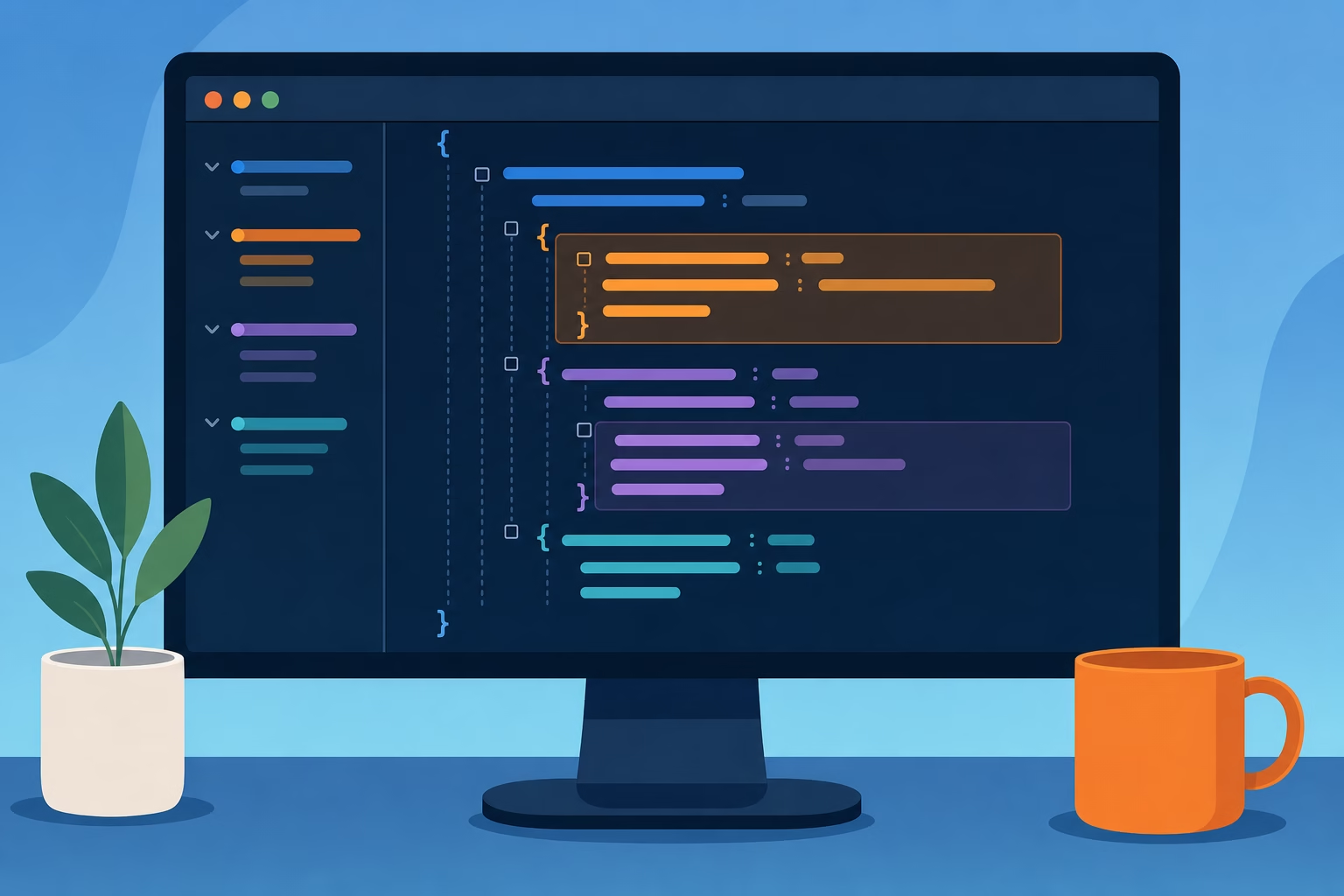
Schema markup is your secret weapon for AEO. It’s the vocabulary answer engines use to interpret your pages.
Without it, Google and other platforms guess at your content’s meaning. With it, you’re handing them a roadmap. The difference is huge.
Start with FAQ schema for question-and-answer sections. Add Article schema to blog posts. If you run a local business, implement LocalBusiness schema with your address, hours, and contact information. Product pages need Product schema with pricing, availability, and reviews.
JSON-LD is the preferred format. It’s clean, easy to validate, and sits in your page’s head section without cluttering the visible content. Google’s Structured Data Testing Tool confirms you’ve done it correctly.
Priority Schema Types for AEO
Not all schema types carry equal weight for answer engines. Focus on these first:
- FAQ Schema: Directly feeds answer boxes and voice results
- HowTo Schema: Perfect for instructional content and step-by-step guides
- Organization Schema: Establishes your brand identity across platforms
- Breadcrumb Schema: Helps engines understand your site hierarchy
- Review Schema: Displays star ratings in search results and answer engines
The team at Actual SEO Media implements these schema types daily for clients who need their content surfaced in AI-driven answers. It works.
Optimize for Natural Language and Voice Queries
People don’t talk to Siri the way they type into Google. They use complete sentences. They add context. They ask follow-up questions.
Your content needs to match that conversational tone. Write like you’re answering a colleague’s question over coffee, not drafting a technical manual.
Long-tail keywords become critical. Instead of targeting “website AEO,” you’d optimize for “how to make website AEO compatible with voice search” or “what steps improve AEO for small business websites.”
Focus on Question Words
Who, what, where, when, why, and how dominate voice queries. Build content around these interrogatives. Create dedicated pages or sections for each question variant.
Restructuring existing pages around question-format headings is a practical first step, because it improves how answer engines read your content without a full rewrite.
Don’t stuff keywords unnaturally. Write for humans first, but keep that conversational query structure front of mind.
Build Comprehensive Topic Clusters
Answer engines favor depth. They want to see that you’ve covered a topic thoroughly, not just published one shallow article.
Create pillar pages that broadly cover a subject, then link to detailed cluster content that explores specific subtopics. This internal linking structure signals topical authority.
For instance, a pillar page on “Website Optimization Strategies” might link to individual posts on AEO, Core Web Vitals, mobile responsiveness, and security certificates. Each cluster page links back to the pillar, creating a web of related content.
This architecture helps answer engines understand your expertise. When someone asks a complex question, the engine can pull information from multiple related pages on your site, confident you’re a reliable source.
Maintain Content Freshness
Outdated content loses credibility fast. Answer engines check publication dates and last-modified timestamps. They prioritize recent, updated information.
Set a quarterly review cycle. Update statistics, refresh examples, add new sections as the topic evolves. Even small updates signal that your content remains relevant.
Partnerships with experts like Actual SEO Media Inc can help maintain this consistency. Fresh content isn’t optional anymore—it’s table stakes.
Monitor Performance and Iterate
How do you know if your AEO efforts are working? Track different metrics than traditional SEO.
Impressions matter more than clicks in an AEO world. If your answer appears in a featured snippet or voice result, users might never visit your site—but your brand still gained visibility and authority.
Monitor featured snippet ownership through Google Search Console. Track position zero rankings. Watch for increases in branded searches, which indicate people heard your answer and want to learn more about your company.
Test and Refine Answer Formats
Not every answer format performs equally. Test variations:
- Paragraph answers (40-60 words)
- Bulleted lists (3-8 items)
- Numbered steps (for processes)
- Tables (for comparisons or data)
Some topics suit lists. Others need brief paragraphs. Track which formats Google selects for featured snippets in your niche, then model that structure.
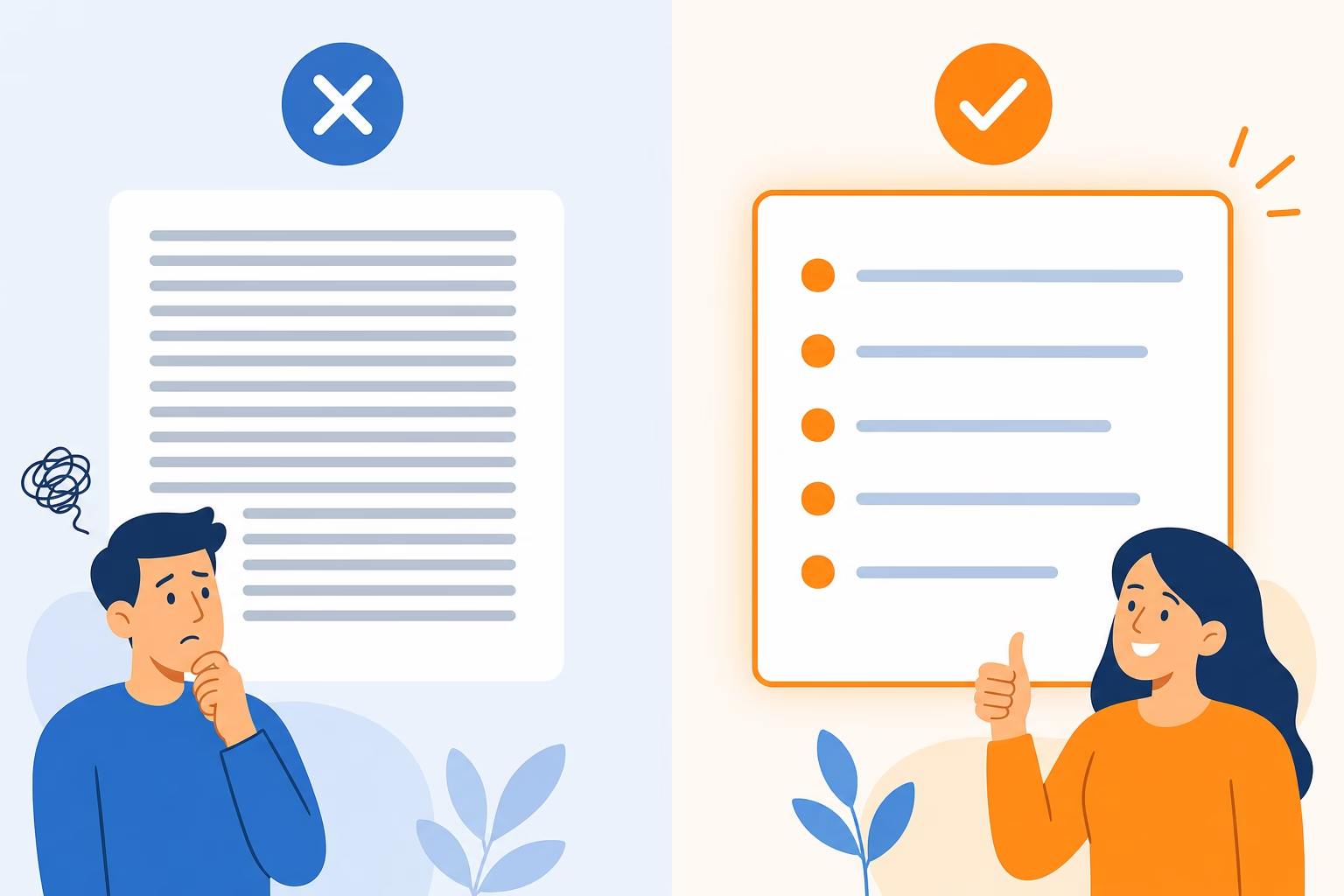
Simple reformatting, such as turning a dense paragraph into a bulleted list, often makes content easier for answer engines to quote. Small changes can make a real difference.
Technical Foundations That Support AEO
AEO isn’t purely about content. Technical health matters.
Page speed affects whether answer engines even consider your content. Mobile-friendliness is mandatory—most voice searches happen on phones. Secure HTTPS connections build trust with both users and algorithms.
Ensure your XML sitemap includes all important pages. Submit it through Google Search Console and Bing Webmaster Tools. Clean URL structures help machines parse your content hierarchy.
Accessibility features also boost AEO. Alt text on images, descriptive link anchor text, proper heading hierarchy—these elements help answer engines understand context. What’s good for screen readers is often good for AI parsers.
Working with a knowledgeable team like Actual SEO Media ensures you’re covering both content and technical angles. AEO demands a holistic approach.
Frequently Asked Questions
What is the main difference between SEO and AEO?
SEO optimizes for search engine rankings to drive clicks to your website. AEO optimizes for answer engines to provide direct responses in featured snippets, voice assistants, and AI chatbots—often without users visiting your site. AEO prioritizes structured, concise answers and schema markup, while SEO traditionally focuses on keywords, backlinks, and page authority. Both matter, but AEO prepares your content for a future where users expect instant answers without clicking.
How does schema markup help with AEO?
Schema markup provides structured data that tells answer engines exactly what your content means. It labels elements like FAQs, how-to steps, reviews, and products so machines can extract and display them accurately. Without schema, answer engines guess at your content’s purpose. With it, you’re explicitly defining everything—making it far more likely your information appears in voice results, featured snippets, and AI-generated responses. It’s the clearest signal you can send to automated systems.
Can I optimize for AEO without hurting my traditional SEO rankings?
Absolutely. AEO and SEO complement each other. The structured, clear content that answer engines love also improves user experience, which boosts traditional rankings. Schema markup doesn’t negatively impact SEO—it enhances it by making your pages more understandable. Concise answers serve both human readers and machines. The only risk is if you strip away depth entirely, but you can provide quick answers and elaborate further in the same article. Most successful sites balance both approaches seamlessly.
How long does it take to see results from AEO optimization?
Featured snippet appearances can happen within days of implementing proper schema and restructuring content, though weeks or months is more typical. Voice search visibility builds gradually as answer engines index your updates and test your content’s relevance. Track impressions and position zero rankings rather than just clicks—you’ll see AEO impact sooner than traditional ranking climbs. Consistent effort matters more than quick wins. Sites that maintain fresh, well-structured content with proper schema see compounding returns over six to twelve months.