

content marketing agency

Content Marketing Agency
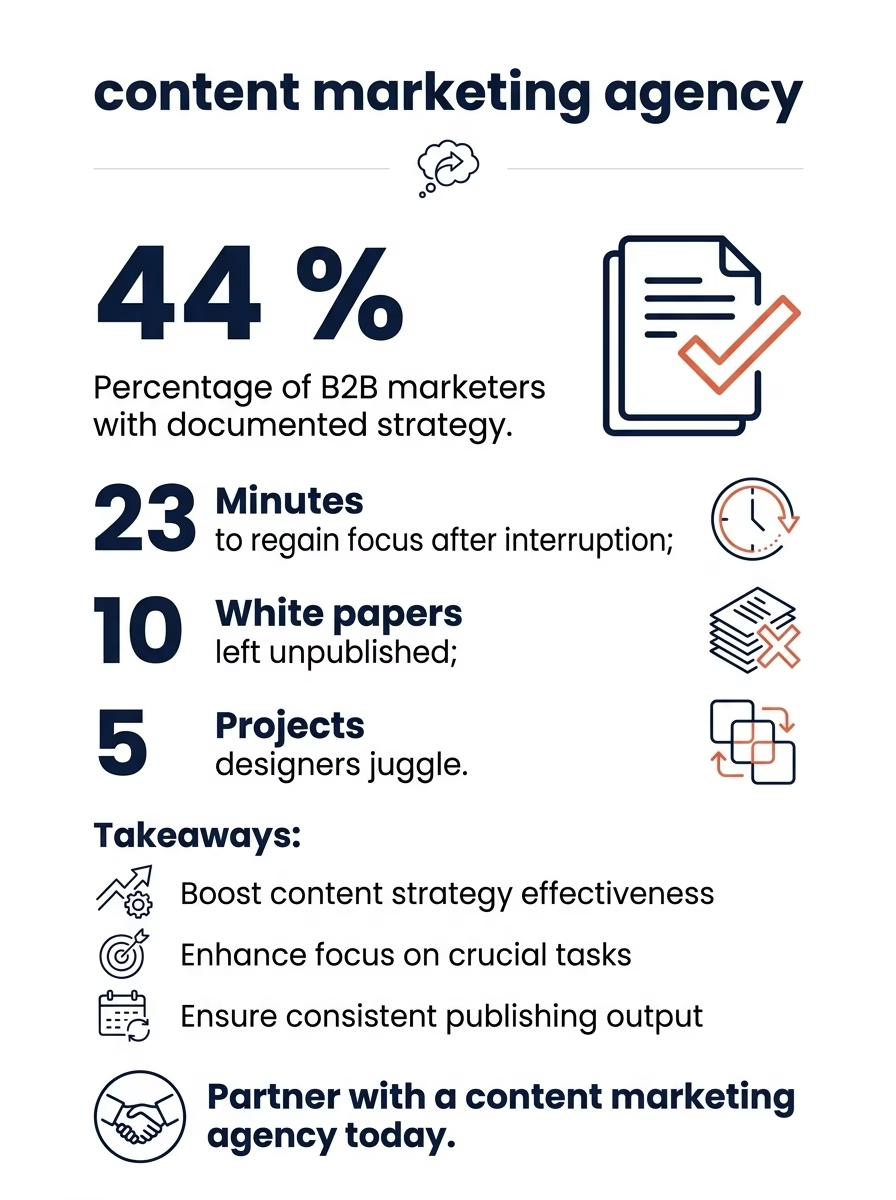
A manufacturing client once handed me a folder stuffed with ten white papers they’d commissioned over three years. None had been published. The writing was solid, the research credible—but no one had mapped the content to actual buyer questions or built a distribution plan. That’s the gap a specialized agency fills.
Businesses generate ideas constantly. What they lack is the system to turn those ideas into traffic, leads, and revenue. A content marketing agency doesn’t just write blog posts. It architects the entire engine: strategy, production, distribution, measurement, and iteration.

What Does a Content Marketing Agency Actually Do?
The answer depends on maturity. Some companies need foundational work—audience research, keyword mapping, editorial calendars. Others already publish regularly but can’t prove ROI. An agency steps in where internal bandwidth or expertise runs out.
Core deliverables typically include:
- Audience persona development rooted in real customer interviews and analytics
- SEO-driven topic planning that aligns with search intent at every funnel stage
- Content production across formats—blog posts, case studies, video scripts, email sequences
- Distribution strategy across owned, earned, and paid channels
- Performance tracking tied to business outcomes, not vanity metrics
At Actual SEO Media, Inc., we’ve worked with clients who needed everything from scratch and others who simply wanted an audit of their existing library. The scope flexes, but the goal stays constant: make content a reliable growth channel.
Why Internal Teams Struggle With Consistency
I’ll be blunt. Most companies can’t maintain a weekly publishing schedule. Marketing directors get pulled into product launches. Writers take sick leave. Designers juggle five projects. Consistency dies first.
According to the Content Marketing Institute’s 2023 research, only 44% of B2B marketers have a documented content strategy. That means more than half are winging it. Agencies bring process where chaos lives.
You’ll also hit the skill ceiling faster than you expect. A blog post about HVAC maintenance requires different expertise than a white paper on supply-chain finance. Agencies maintain rosters of specialist writers, each with domain knowledge that’s hard to hire full-time.
The Hidden Cost of Context Switching
Your in-house marketer can write. But she’s also managing webinars, updating the CRM, and fielding sales requests. Every task switch costs time—research shows it can take 23 minutes to regain focus after an interruption. Outsourcing content to an agency lets her focus on strategic work that only she can do.
How to Choose the Right Partner
Not every content marketing agency will fit your needs. Some specialize in SaaS, others in e-commerce or professional services. Start by auditing their own content. If their blog is thin or outdated, that’s a red flag.
Ask these questions during discovery calls:
- Who will actually write our content? (Avoid agencies that obscure this.)
- How do you handle revisions and approval workflows?
- What does your reporting look like? Can we see a sample dashboard?
- Do you have case studies in our industry or with similar business models?
Request samples that match your content type. A flashy case study doesn’t prove they can write technical documentation. And pay attention to turnaround times—some agencies promise two blog posts per week but deliver generic filler that ranks nowhere.
Pricing Models That Make Sense
Retainers work well when you need ongoing support—say, four blog posts, two emails, and one video script per month. Project-based pricing fits campaigns or one-time deliverables like a content audit or pillar page. Avoid agencies that bill hourly without caps; scope creep becomes expensive fast.
Actual SEO Media, Inc. typically structures engagements around monthly retainers with clear deliverable counts, so clients know exactly what they’re getting. Transparency matters.
Measuring What Actually Matters
Page views are nice. They don’t pay the bills. A good agency ties content performance to revenue indicators—lead form submissions, demo requests, trial sign-ups, or even offline conversions tracked through attribution models.
According to U.S. Bureau of Labor Statistics productivity research, aligning inputs to measurable outputs is the only way to assess true efficiency. The same applies to content. If a blog post drives 500 visits but zero conversions, it’s decoration.
We track:
- Organic traffic growth by topic cluster
- Keyword rankings for commercial-intent terms
- Conversion rate by content type and funnel stage
- Time-to-close for leads that engage with specific assets
- Customer acquisition cost (CAC) influenced by content touchpoints
Monthly reporting should include narrative context—not just charts. Why did traffic spike in March? Which piece drove the most qualified leads? What should we double down on next quarter?
When to Bring an Agency On Board
Timing varies. Some companies hire agencies before launch to build a content foundation. Others wait until organic traffic plateaus or paid acquisition costs spike. There’s no universal trigger, but watch for these signals:
Your internal team is underwater. Deadlines slip, quality drops, or burnout sets in.
You’re entering a new market or launching a product and need authority content fast.
Your SEO rankings stagnated despite consistent publishing. That suggests a strategy problem, not an effort problem.
Competitors dominate search results for high-value keywords, and you lack the in-house expertise to catch up.
If any of those sound familiar, you’re already late. The best time to start was six months ago. The second-best time is now.
Working With Actual SEO Media, Inc.
We’re based in Houston and work with clients across Texas and nationally. Our approach starts with a content audit—we want to know what you’ve already created, what’s performing, and where the gaps are. Then we build a roadmap that aligns with your sales cycle and customer journey.
Most engagements include a mix of foundational SEO work (keyword research, site structure recommendations) and ongoing content production. We don’t operate in a silo. Our writers collaborate with your sales team, your product managers, and your subject-matter experts to ensure accuracy and relevance.
You’ll get a dedicated account manager, a shared project board for transparency, and monthly strategy calls. We’re not a black box. You’ll know what we’re working on, why it matters, and how it’s performing. Reach out if you’re ready to build a system that scales.
Frequently Asked Questions
What’s the difference between a content marketing agency and a traditional advertising agency?
Traditional agencies focus on campaigns—TV spots, print ads, billboards—that interrupt audiences. A content marketing agency creates assets people actively seek out: blog posts, guides, videos. The goal is to attract and educate rather than interrupt. Content builds long-term organic visibility, while ads stop working the moment you stop paying. Many businesses need both, but the strategies and skill sets differ significantly.
How long does it take to see results from content marketing?
Expect three to six months before you see meaningful organic traffic growth. SEO takes time—Google needs to crawl, index, and rank your content. If you’re targeting competitive keywords, it might take longer. That said, some wins arrive faster: email nurture sequences can drive conversions within weeks, and social promotion can generate immediate engagement. Patience pays off, but early indicators like improved rankings or engagement metrics should appear within 60 days.
Can a small business afford a content marketing agency?
Yes, if you choose the right scope. You don’t need a $10,000/month retainer to start. Many agencies offer starter packages—two blog posts and one email per month, for example—that fit tighter budgets. The key is consistency. Publishing one well-researched post monthly will outperform sporadic, low-quality output. As revenue grows, you can scale the engagement. Some agencies also offer project-based pricing for audits or strategy workshops, which can be a smart first step.
Do I lose control if I outsource content creation?
Not if you set clear expectations upfront. A professional agency will involve you in approvals, share drafts for feedback, and revise until it matches your brand voice. You should always retain final say. The best partnerships feel collaborative—you provide the insider knowledge and strategic direction, the agency handles execution and optimization. If an agency resists feedback or refuses to show you drafts before publishing, walk away. Transparency and communication are non-negotiable.
Related: Does SEO Management Company — Learn more about how this can grow your business.
Related: SEO Domination Tips From SEO Guru Dickinson, TX — Read our full guide on this service.