Last quarter, a Tomball orthodontist called me frustrated. They’d spent $12,000 on a website redesign six months earlier. The site looked stunning—award-worthy design, crisp images, smooth animations. New patient appointments? Down 30% compared to the previous year. The culprit wasn’t the design. It was five preventable SEO mistakes their web designer never addressed.
Most Tomball businesses make the same errors repeatedly. They invest in digital assets without understanding how search visibility works. They optimize for vanity metrics while competitors capture patients actively searching for care. Professional seo services tomball tx exist specifically to prevent these costly missteps—the kind that practices like Gentle Dental avoid by partnering with specialists who understand both search algorithms and healthcare marketing constraints.
Grow your business with SEO Services Tomball, TX.
Five Critical SEO Blunders Tomball Businesses Keep Making
Every month, I audit websites for Tomball-area medical and dental practices. The same patterns emerge repeatedly. These aren’t small technical oversights—they’re fundamental strategic errors that keep qualified patients from ever finding these practices online.
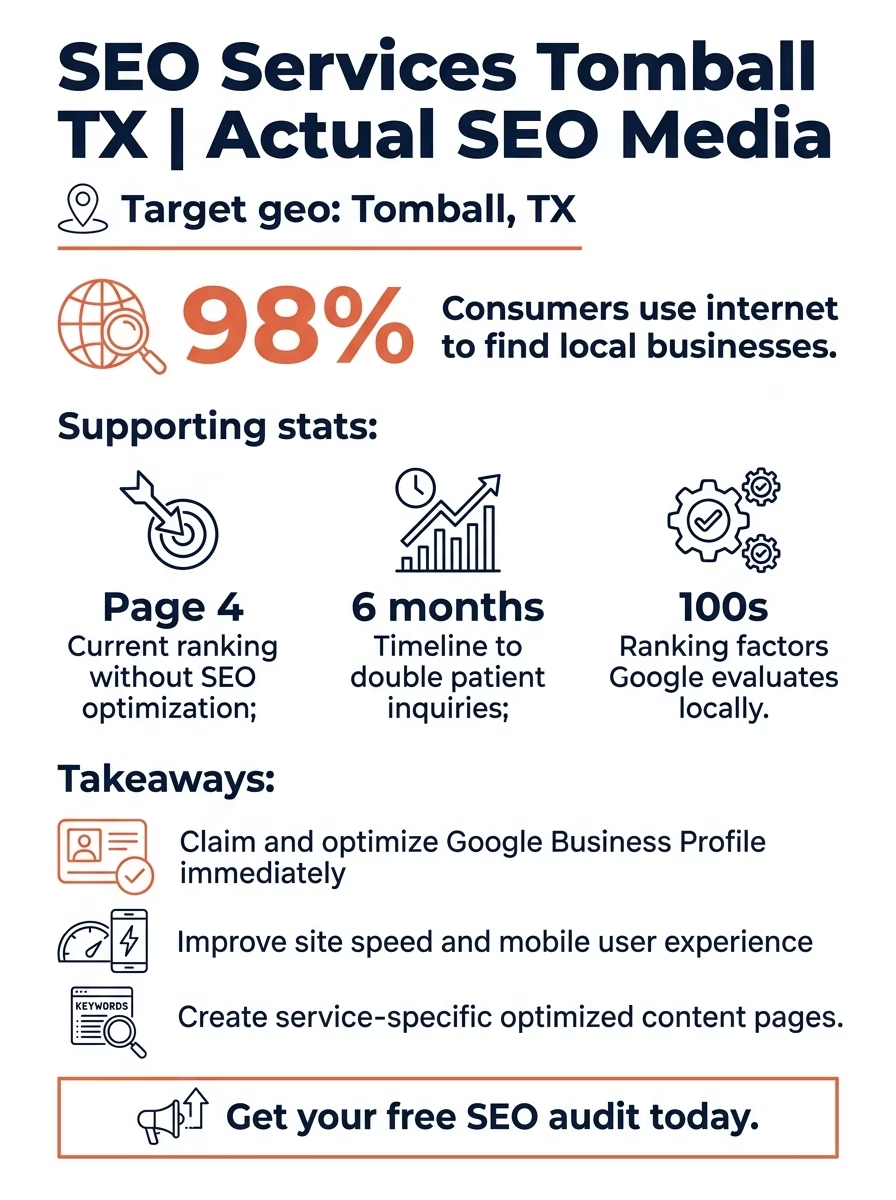
What makes these errors particularly damaging in Tomball is the competitive landscape. You’re competing against Houston metro practices with larger marketing budgets while trying to capture patients from Montgomery County neighborhoods. According to the BrightLocal Consumer Review Survey, 98% of consumers researched local businesses online in 2023. Your mistakes aren’t just costing you some patients—they’re costing you virtually all potential new patients.
Mistake #1: Building a Website and Expecting Traffic to Magically Appear
This is the most expensive assumption Tomball practices make. They hire a designer, launch a beautiful site, and wait for the phone to ring. Three months later, they’re bewildered when Google Analytics shows 47 visitors per month—most of them existing patients who already knew the web address.
A website without optimization is like opening a practice in an unmarked building with no signage. I recently reviewed a site for a Tomball cosmetic dentist who’d invested $18,000 in custom design. Their homepage had zero title tag optimization. The meta description read “Home – Welcome.” Service pages contained 80-word descriptions that Google couldn’t extract meaningful context from.
The fix requires intentional architecture decisions before design ever starts. Each service needs its own dedicated page with 800+ words explaining procedures, costs, recovery time, and patient concerns. Your homepage should clearly communicate location and specialty within the first paragraph. Title tags need to include both service terms and geographic identifiers. When Gentle Dental structured their service pages properly, search visibility increased 340% within five months.
Actual SEO Media provides trusted SEO Services in Tomball, TX.
The “Set It and Forget It” Content Problem
Launching a site and never updating it is equally damaging. Google interprets stale content as abandonment. Search algorithms prioritize sites that demonstrate ongoing relevance through fresh information. You don’t need daily blog posts. But quarterly content additions—new service explanations, answers to frequently asked patient questions, updates about technology investments—signal active management. One Tomball periodontist added just one educational article monthly. After seven months, their organic traffic doubled.
Mistake #2: Treating Mobile Users as an Afterthought
Over 70% of local healthcare searches now originate from mobile devices. Yet I regularly audit Tomball practice websites that are functionally broken on smartphones. Buttons that require precision tapping. Text sized for desktop monitors. Forms that don’t work with mobile keyboards. Images that take eight seconds to load on 4G connections.
Google switched to mobile-first indexing in 2021. That means they primarily evaluate your mobile site when determining rankings—not your desktop version. A site that works beautifully on a 27-inch monitor but frustrates smartphone users will rank poorly regardless of your content quality.
Page Speed as a Deal-Breaker
Speed matters more on mobile than desktop. Google’s data shows that when page load time increases from one to three seconds, bounce probability increases 32%. At five seconds, it increases 90%. A Tomball oral surgeon reduced their homepage load time from 5.2 seconds to 1.8 seconds by compressing images and switching hosts. Patient inquiry form submissions increased 56% the following month.
Improve your online presence with SEO Services Tomball, TX.
Mistake #3: Overlooking the Power of Patient Voices
Last month, I compared two Tomball dental practices competing for the same local keywords. Practice A had superior technical SEO, better content, and more backlinks. Practice B ranked higher. The difference? Practice B had 284 Google reviews averaging 4.8 stars. Practice A had 19 reviews averaging 4.9 stars.
Reviews have become perhaps the single most influential ranking factor for local healthcare searches. They signal trust, active patient engagement, and practice quality. The practices that dominate local search results have simple review systems integrated into their patient experience. After successful appointments, they send follow-up emails with direct review links. They train front desk staff to mention reviews during checkout. They display QR codes in waiting areas.
Responding to Reviews—Especially Negative Ones
A thoughtful response to a one-star review demonstrates professionalism to everyone reading it. I’ve seen practices turn negative reviews into competitive advantages by responding promptly, acknowledging concerns, and offering to resolve issues offline. Ignoring reviews—positive or negative—signals disengagement. A simple “Thank you for sharing your experience” takes 15 seconds and shows you value patient feedback.
Mistake #4: Copying Content Strategies from Non-Healthcare Industries
Generic SEO advice doesn’t translate to healthcare marketing. I constantly see Tomball practices following tactics designed for e-commerce sites or software companies. They create blog content about trending topics unrelated to their services. They optimize for high-volume keywords that don’t represent patient intent. They ignore compliance considerations unique to medical marketing.
Healthcare SEO requires specialized understanding. HIPAA governs how you can discuss cases. State dental boards regulate advertising claims. Insurance relationships affect how you discuss pricing. Furthermore, patient search behavior differs fundamentally from consumer product research. Someone searching “tooth pain relief” or “emergency dentist open now” has immediate need and different decision criteria.
The Education-to-Conversion Path
Effective healthcare content builds trust before requesting appointments. A person researching “dental implant cost” isn’t ready to book surgery—they’re gathering information. Content that thoroughly explains the procedure, recovery timeline, financing options, and success rates establishes expertise. That same person returns when they’re ready to schedule because your practice already demonstrated knowledge and transparency. Research from Backlinko analyzing 11.8 million search results found that comprehensive content (1,500+ words) significantly outperforms thin content for competitive healthcare keywords.
Mistake #5: Chasing Rankings Instead of Conversions
Vanity metrics destroy SEO budgets. I’ve consulted with Tomball practices obsessed with ranking #1 for broad terms like “dentist” while ignoring whether those rankings generate appointments. They celebrate moving from position 8 to position 5 for keywords that don’t represent patient intent. Meanwhile, their phone stays quiet.
“Cosmetic dentist Tomball” has lower search volume than “dentist,” but dramatically higher conversion rates. Someone searching that specific phrase has clear intent and readiness to schedule. The growth opportunity lies in capturing searches from people who haven’t heard of you yet—those using service and location terms.
Tracking What Actually Matters
Meaningful metrics connect search visibility to business outcomes. Track how many appointment requests come from organic search. Monitor which keywords drive phone calls. Measure conversion rates from pages targeting specific services. A Tomball orthodontist realized that ranking #1 for “braces” was generating traffic but few consultations. After analyzing search intent, they shifted focus to “adult braces Tomball” and “invisible aligners near me”—more specific terms indicating serious interest. Consultations increased 40% despite lower overall traffic volume.
Why These Mistakes Cost Tomball Practices Real Revenue
Each error compounds the others. A site that’s not mobile-optimized loses patients to competitors. Without reviews, you rank lower even with good content. Generic content strategies waste resources on keywords that don’t convert. The financial impact becomes clear when you calculate lifetime patient value. A single dental patient represents thousands in revenue across years of care. Losing ten potential patients monthly to SEO mistakes costs six figures annually. The practices dominating Tomball search results aren’t necessarily providing superior care—they’re simply visible when patients are searching.
The Smart Alternative: Strategic SEO That Actually Works
Avoiding these mistakes requires partnering with specialists who understand both search algorithms and healthcare marketing constraints. Look for seo services tomball tx providers with healthcare-specific experience—not generalists promising to rank any business. Ask detailed questions about their process, timeline expectations, and reporting methods.
Red flags include guarantees of immediate #1 rankings, suspiciously cheap pricing, and inability to explain their methodology clearly. Request case studies showing measurable results for practices similar to yours. Not testimonials saying “they’re great”—actual data demonstrating traffic increases, ranking improvements for relevant keywords, and appointment growth. Teams like Gentle Dental understand that selecting an SEO partner requires due diligence and clear performance expectations.
Timeline and Investment Expectations
Legitimate SEO requires patience. Meaningful results typically emerge between month four and month seven. Anyone promising week-two rankings is using risky shortcuts that will damage your long-term visibility. Search algorithms need time to crawl optimized content, evaluate changes, and adjust rankings accordingly.
Budget expectations for professional healthcare SEO range from $2,000-$5,000 monthly depending on market competition and practice goals. This investment covers technical optimization, content development, link acquisition, review management, and ongoing algorithm adaptation. Unlike paid advertising that stops generating leads the moment you stop paying, SEO builds compounding value that continues attracting patients indefinitely.
Frequently Asked Questions
What’s the biggest SEO mistake small practices make?
The most damaging error is launching a website without proper optimization and assuming traffic will automatically follow. Practices invest heavily in design while ignoring fundamental search visibility requirements—appropriate page structure, keyword targeting, mobile optimization, and technical performance. This mistake costs more than any other because it means your entire digital presence generates minimal return on investment.
How important are patient reviews for local search rankings?
Reviews have become arguably the most influential local ranking factor. Google prioritizes businesses with substantial positive feedback because reviews indicate trustworthiness and active engagement. A practice with 200+ reviews typically outranks competitors with superior technical SEO but only 20 reviews. Beyond rankings, reviews directly influence patient decisions—84% of people trust online reviews as much as personal recommendations.
Can I fix SEO mistakes myself or do I need professional help?
Basic corrections—claiming your Google Business Profile, improving page load speed, requesting patient reviews—can be handled internally. However, comprehensive optimization addressing technical infrastructure, content strategy, competitive keyword research, and healthcare compliance considerations requires specialized expertise. For implementation guidance, review resources like Actual SEO Media, Inc.’s guide to seo company the woodlands tx.