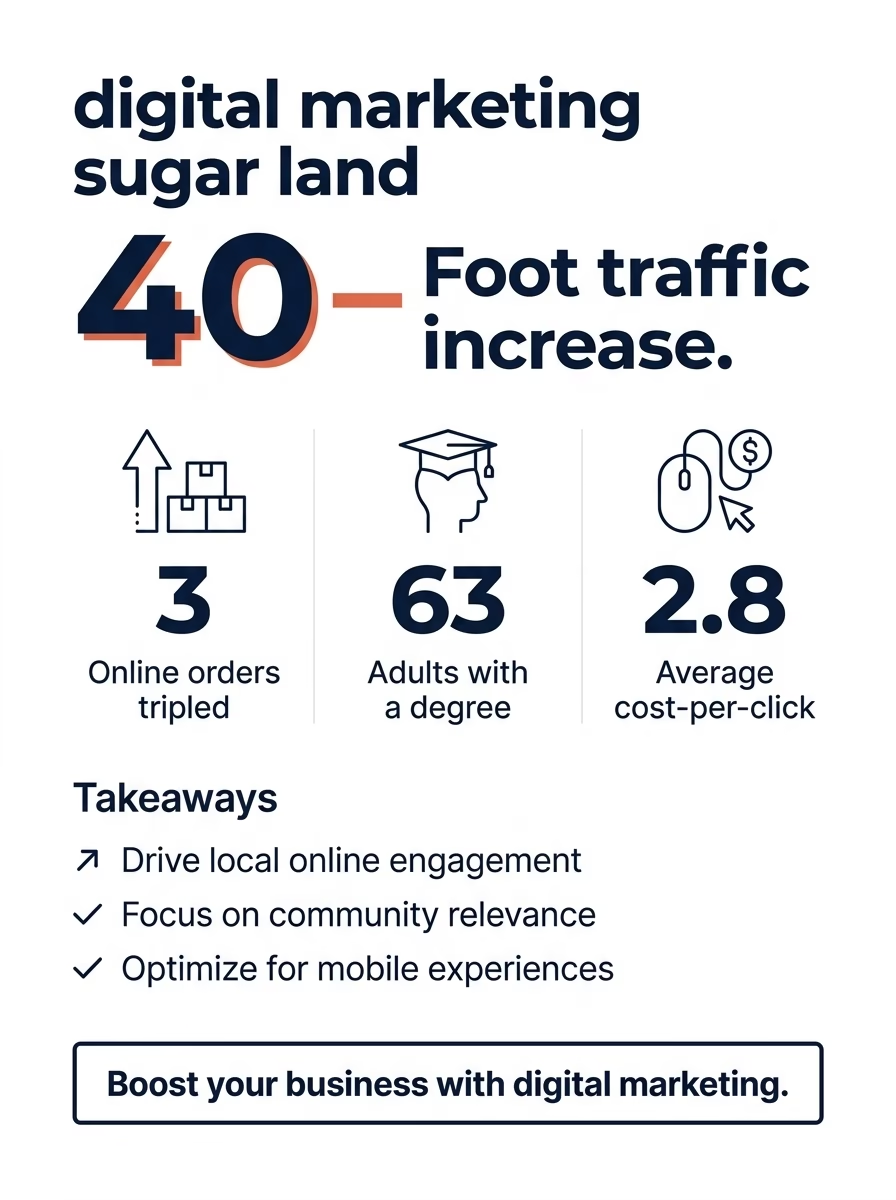
A bakery on Highway 6 just hired its first digital marketing consultant. Within ninety days, foot traffic jumped 40% and online orders tripled. That’s not luck—it’s what happens when local businesses in Sugar Land stop guessing and start implementing strategy-driven campaigns. Digital marketing isn’t a luxury anymore. It’s the oxygen your business breathes, especially in a thriving suburb like this one where competition doesn’t sleep.
Sugar Land sits at the intersection of Houston’s explosive growth and Fort Bend County’s economic diversity. With more than 111,000 residents and a median household income well above the Texas average, the market here rewards businesses that show up where their customers already are: online. But not every tactic works, and not every agency understands the nuances of this community.
digital marketing sugar land 4
Why Sugar Land Businesses Need Hyper-Local Digital Strategy
You can’t copy-paste a Dallas playbook and expect it to work here. Sugar Land’s demographics skew educated, diverse, and digitally savvy. According to the U.S. Census Bureau, over 63% of adults in Fort Bend County hold a bachelor’s degree or higher. That means your audience researches before they buy, compares reviews obsessively, and expects seamless mobile experiences.
Local intent matters. When someone searches “best HVAC repair Sugar Land” at 9 p.m. on a summer night, they don’t want a national brand’s generic landing page. They want a name they recognize, reviews from neighbors, and a phone number that works. Actual SEO Media, Inc. has spent years refining geo-targeted campaigns that speak directly to Fort Bend County shoppers, not just broad Houston metro traffic.
Here’s the thing: organic search and paid ads need to work together. SEO builds trust over months. PPC delivers leads today. Your business deserves both, calibrated to the way Sugar Land residents actually search and shop.
The Pillars of Effective Digital Marketing in Sugar Land
Let’s break down what actually moves the needle.
Search Engine Optimization That Respects Local Context
Google’s algorithm favors proximity and relevance. If your Google Business Profile lists an address in Missouri City but you’re trying to rank for “digital marketing Sugar Land,” you’re fighting uphill. Precision matters. Your NAP (name, address, phone) must match across every directory, from Yelp to the Better Business Bureau. Inconsistencies confuse crawlers and kill rankings.
Content should reference landmarks, neighborhoods, and real community touchpoints. Mention Town Square, the Imperial Market, or First Colony Mall. Those aren’t just keywords—they’re signals to Google that you know this place. I’ve watched businesses double their local pack visibility just by embedding authentic geo-references into service pages.
Pay-Per-Click Advertising With Tight Geo-Fencing
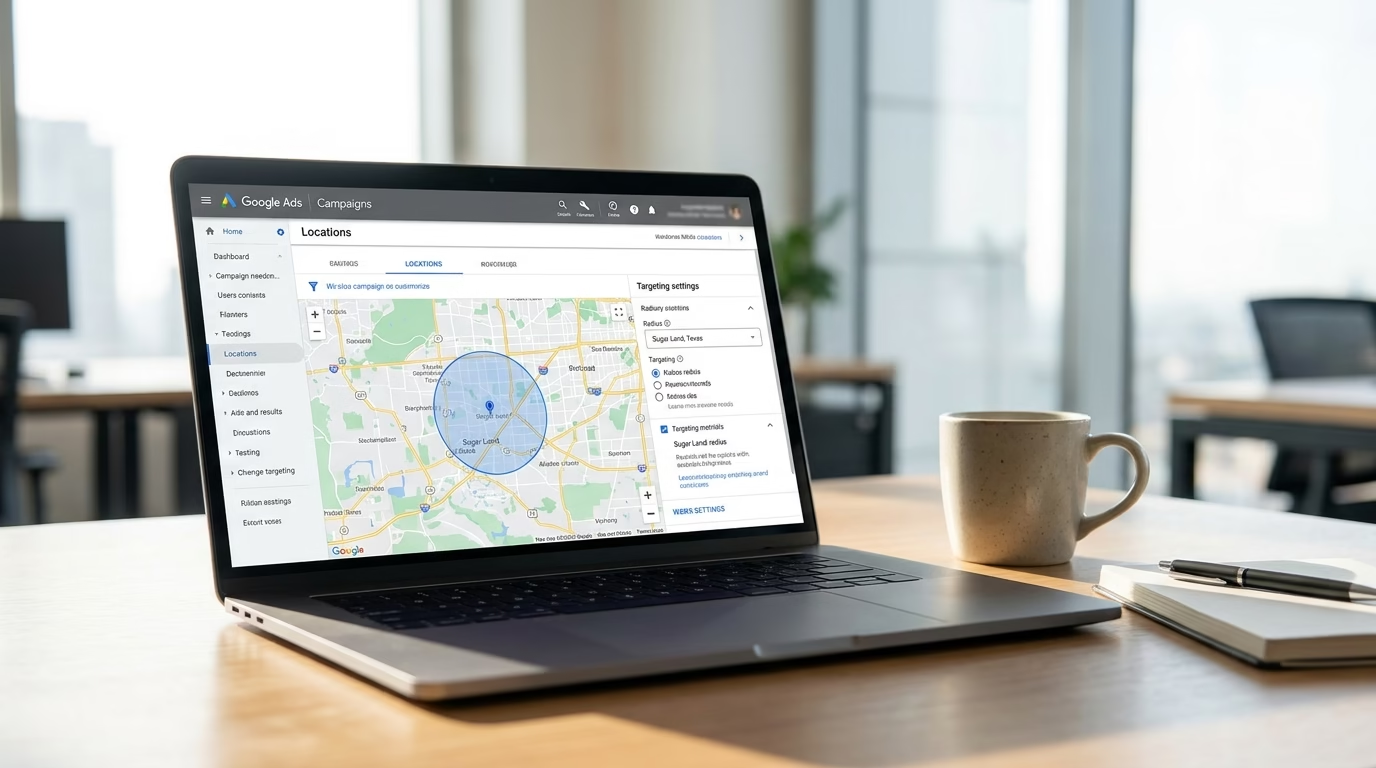
Broad match keywords burn budgets. Exact match and radius targeting protect them. A roofing company doesn’t need clicks from Galveston or Katy—they need homeowners within a ten-mile radius of Sugar Land who just searched “roof leak repair near me.” Negative keywords filter out bargain hunters and tire-kickers. Ad extensions showcase reviews, phone numbers, and real-time promotions.
According to data from the Bureau of Labor Statistics, the average cost-per-click in the Houston metro hovers around $2.80 for service industries, but hyper-local targeting can drop that by 30% while improving conversion rates. That’s math worth paying attention to.
digital marketing sugar land 5
Social Media That Builds Community, Not Just Followers
Vanity metrics lie. Ten thousand followers mean nothing if none of them live in Sugar Land or buy your product. Focus on engagement rate, shares, and direct messages. Post about local events—Sugar Land Wine & Food Affair, the annual Kite Festival, high school sports. Tag other businesses. Respond to comments within an hour, not a day.
Instagram and Facebook still dominate for local retail and service brands here. LinkedIn works if you’re B2B. TikTok? It’s growing, but don’t abandon proven channels chasing trends unless your audience is under 30.
What Makes Digital Marketing Sugar Land Different From Houston Proper
Houston’s a sprawling metro with 2.3 million people. Sugar Land is a city of about 111,000 with its own identity, buying habits, and pride. Residents here don’t say “I live in Houston.” They say Sugar Land. That distinction shapes how you write ad copy, choose images, and select influencers.
The average household income in Sugar Land sits around $120,000—significantly higher than the Texas average. That means premium positioning often outperforms discount messaging. Quality, convenience, and reputation matter more than rock-bottom prices. Your digital marketing should reflect that.
Traffic patterns differ, too. Highway 59 and the Grand Parkway create unique commuter flows. Geo-targeted mobile ads timed for rush hour can capture decision-makers stuck in traffic thinking about dinner, auto repair, or weekend services.
How Actual SEO Media, Inc. Tailors Campaigns for Sugar Land
Cookie-cutter packages fail here. Actual SEO Media, Inc. starts every engagement with a local market audit: competitor analysis, keyword gap research, and a deep dive into your Google Analytics and Search Console data. They don’t guess. They measure.
One client—a med spa in First Colony—was spending $4,000 a month on Facebook ads with zero attribution. After restructuring the campaign around conversion tracking, retargeting website visitors, and A/B testing landing pages specific to Botox and laser treatments, cost-per-acquisition dropped 55% in sixty days. Real results, documented in dashboards you can actually read.
Source: Actual SEO Media, Inc. analysis
Content creation goes beyond blog posts. Video testimonials from Sugar Land customers, before-and-after galleries geotagged to local zip codes, and schema markup that feeds Google’s knowledge graph—all of it works together. The team also handles reputation management, because a single one-star review left unanswered can tank months of SEO work.
Measuring ROI: What Success Looks Like
Clicks don’t pay bills. Conversions do.
Track these metrics religiously: cost per lead, lead-to-customer conversion rate, customer lifetime value, and return on ad spend (ROAS). If you’re spending $2,000 on Google Ads and generating $10,000 in revenue with a 40% margin, that’s a 2x ROAS—decent, but improvable. Aim for 3x or higher by refining audience segments and landing page copy.
Call tracking reveals which keywords drive phone inquiries. Heatmaps show where users drop off on your site. Monthly reporting from your agency should include all of this, not just vanity graphs showing “impressions up 12%.”
Small changes compound. A 5% boost in conversion rate, a 10% drop in bounce rate, and a 15% increase in average session duration might sound modest individually. Together, they can double your pipeline within a quarter.
Common Mistakes Sugar Land Businesses Make (And How to Avoid Them)
Ignoring mobile users is mistake number one. Over 60% of local searches happen on smartphones, yet I still see businesses with desktop-only designs and forms that won’t load on iOS. Responsive design isn’t optional.
Another trap: running ads without conversion tracking. You’re flying blind if you don’t know which campaigns generate calls, form fills, or purchases. Install Google Tag Manager, set up event tracking, and connect your CRM.
Finally, businesses underestimate the power of reviews. A company with 80 four- and five-star Google reviews will outrank a competitor with better technical SEO but only twelve reviews. Ask happy customers to leave feedback. Make it easy—send a direct link via text or email within 24 hours of service completion.
Taking the Next Step With Your Digital Marketing in Sugar Land
Your competition already runs ads. They’re already optimizing for “near me” searches. Waiting won’t make it easier—it just hands them more market share.
Start with an honest audit of where you stand. Check your Google Business Profile for accuracy. Search your own brand and see what appears. Run incognito searches for your main service keywords and note who ranks above you. Then reach out to a team that knows Sugar Land inside and out, like the experts at Actual SEO Media, Inc.
Digital marketing in Sugar Land works when it’s built on data, local knowledge, and relentless testing. You don’t need to become an expert yourself. You just need a partner who already is.
Frequently Asked Questions
What does digital marketing cost for a small business in Sugar Land?
Most agencies charge between $1,500 and $5,000 per month depending on scope. That typically includes SEO, Google Ads management, social media, and content creation. Expect to invest at least $2,000 monthly for competitive industries like home services or healthcare. One-time setup fees for website optimization or campaign builds can add another $1,000 to $3,000 upfront. ROI should justify the spend within 90 to 180 days if the strategy is sound.
How long does it take to see results from SEO in Sugar Land?
Organic search rankings usually improve within three to six months, though competitive keywords can take longer. Local pack placement (the map results) often responds faster—sometimes within four to eight weeks—if your Google Business Profile is optimized and you’re earning consistent reviews. Paid ads deliver immediate traffic, so many businesses run PPC while waiting for SEO momentum to build. Patience pays off: long-term SEO compounds, while ad spend stops the moment you pause campaigns.
Should I focus on Google Ads or Facebook Ads for my Sugar Land business?
It depends on intent. Google Ads capture high-intent searchers actively looking for your service right now—think “emergency plumber Sugar Land” at midnight. Facebook and Instagram Ads work better for awareness, retargeting, and visually driven offers like events, retail, or lifestyle services. Many successful campaigns use both: Google for bottom-of-funnel conversions, social for top-of-funnel awareness and retargeting. Test both with modest budgets, measure results, then scale what works.
Do I really need a local SEO agency, or can I do it myself?
You can absolutely learn the basics—claim your Google Business Profile, get listed in directories, and write keyword-optimized content. But staying current with algorithm updates, managing technical SEO, and running multi-channel ad campaigns demands serious time and expertise. Most business owners find better ROI hiring specialists so they can focus on operations and customer service. A good agency becomes an extension of your team, bringing tools, reporting, and experience you’d spend years building in-house.