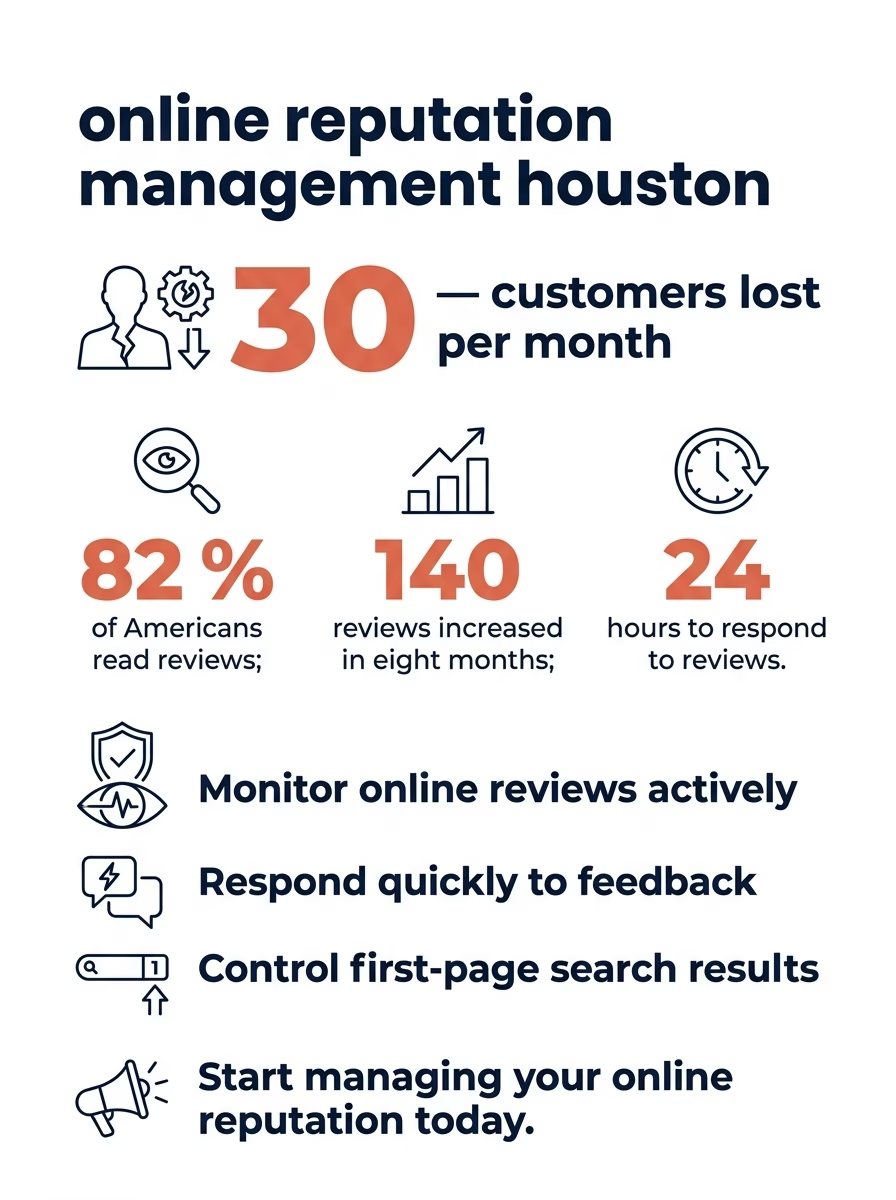
A single negative review left on Google My Business can cost a Houston restaurant up to 30 customers a month. That’s not speculation—it’s data from a local Montrose café owner who tracked reservation drops after a disgruntled ex-employee posted a one-star rant. In a city where energy executives, medical center professionals, and small business owners all compete for visibility, your digital footprint matters more than your physical storefront.
Houston’s business environment is unique. You’ve got Fortune 500 energy firms shoulder-to-shoulder with family-run Tex-Mex joints on the same search results page. When someone Googles your company name, what shows up in those first ten blue links can make or break a deal before you ever shake hands.
online reputation management houston 3
Why Houston Businesses Face Unique Reputation Challenges
The Bayou City’s economy is sprawling and diverse. Oil and gas firms deal with environmental activists. Medical practices in the Texas Medical Center compete for patients researching specialists at 11 p.m. on their phones. Even HVAC contractors find themselves buried under competitor reviews because Houstonians leave feedback when their AC dies in August heat.
According to research from Pew Research Center, 82% of Americans read online reviews for local businesses, and that number climbs higher in metro areas. Your reputation isn’t just a marketing concern—it’s a revenue channel.
Houston’s size complicates things. Katy, The Woodlands, Sugar Land—each suburb operates like its own city. A plumbing company might have glowing reviews in Memorial but radio silence in Clear Lake. Geographic fragmentation means you need a strategy that covers the entire metro, not just one ZIP code.
What Online Reputation Management Actually Involves
Forget the vague consultant-speak. Here’s what the work looks like day-to-day.
First, monitoring. Software tools scan Google, Yelp, Facebook, industry-specific review sites (Avvo for attorneys, Healthgrades for doctors), and even Reddit threads. You can’t respond to what you don’t see. I’ve watched a River Oaks law firm lose a corporate client because they missed a Glassdoor complaint that the prospect’s HR team found during due diligence.
Second, response protocols. A digital marketing manager at a mid-sized firm told me their rule: reply to every review within 24 hours, positive or negative. Template responses feel robotic. Personalized replies that reference specifics from the review signal that a real human is listening.
Third, content creation. When you Google your business name, ideally you control at least six of the first-page results. That means maintaining profiles on LinkedIn, publishing blog posts, earning press mentions, and keeping social media active. Reputation services help coordinate this content engine so search results push down any negatives.
Review Generation vs. Fake Reviews
There’s a right way and a wrong way. The wrong way: buying five-star reviews on Fiverr. Google’s algorithms catch that, and the fallout is worse than the original problem.
The right way: building a systematic ask. After a successful project closes, your account manager sends a personalized email with direct links to your Google and industry review profiles. A Heights-based interior designer I spoke with increased her review count from 12 to 140 in eight months using this method—all legitimate, all from actual clients.
Handling Negative Reviews Without Making Things Worse
Never delete. Never argue. Never threaten legal action in a public reply.
Those are the cardinal rules. When a one-star review appears, take a breath. Some reviews violate platform policies—fake reviews, profanity, clear competitors posing as customers. Those you can flag for removal through official channels. According to FTC guidelines on fake reviews, platforms are required to have reporting mechanisms.
For legitimate complaints? Acknowledge the issue, apologize where appropriate, and offer a path to resolution offline. “We’re sorry your experience didn’t meet expectations. Please call our manager directly at [number] so we can make this right.” That template works because it shows future readers you care about fixing problems.
One Galleria-area hotel saw a pattern: guests complained about parking fees in reviews. Instead of defending the policy in replies, they added a line to confirmation emails explaining the fee and offering valet alternatives. Complaints dropped 40% in three months. Sometimes reputation management is just operational communication.
The ROI of Proactive Reputation Work
Let’s talk numbers. A study by Harvard Business School found that a one-star increase in Yelp rating leads to a 5-9% increase in revenue for restaurants. That’s not pocket change for a busy Memorial-area steakhouse doing $2 million annually—it’s up to $180,000.
For B2B companies, the math is different but just as compelling. Decision-makers research vendors obsessively. If your competitor has 47 Google reviews averaging 4.8 stars and you have six reviews at 4.2, guess who gets the RFP shortlist?
Beyond reviews, reputation work includes crisis management. When a Montrose retail shop faced a viral TikTok video criticizing their return policy, their crisis response team had a statement live within two hours and coordinated responses across Instagram, Facebook, and Google. The video still spread, but the narrative shifted from “terrible business” to “policy misunderstanding now resolved.”
Long-Term Brand Building vs. Quick Fixes
Source: Actual SEO Media, Inc. analysis
Some agencies promise to “remove all negative content” in 30 days. Run.
Legitimate reputation work is a marathon. You’re building trust signals that accumulate over months. Fresh reviews. Published articles. Speaking engagements. Community involvement that generates local press. Each piece is small; the compound effect is significant.
I’ve seen Houston startups in the fintech space use thought leadership content to outrank a single bad Trustpilot review. It took four months of consistent blog publishing and LinkedIn activity, but now that review sits on page three of search results where approximately zero prospects will ever see it.
Choosing the Right Partner in Houston
Not every reputation firm understands Texas business culture. A national agency might not grasp why a Houston construction company needs different messaging than a Denver contractor—Houstonians care about hurricane preparedness, foundation issues from clay soil, and whether you’re insured for flood zones.
Look for firms that show you their monitoring dashboards, not just pretty PowerPoints. Ask how they handle industry-specific review sites. A dentist needs a strategy for Healthgrades and ZocDoc; a personal injury attorney needs Avvo and Martindale-Hubbell covered.
Pricing varies wildly. Small businesses might spend $500-$1,500 monthly for monitoring, review response, and basic content. Enterprise clients with complex reputations—think hospitals, publicly traded companies, or firms in litigation—can easily hit $10,000+ monthly for comprehensive management.
Transparency matters. Your reputation partner should explain exactly what they’ll do each month and provide measurable KPIs: review count, average rating, search result positions for your brand terms, sentiment analysis scores.
Taking the First Step
Start with a simple audit. Google your business name and your own name. Check the first three pages of results. What do you see? Then hit the major review platforms—Google, Facebook, Yelp, and any industry-specific sites.
If you find gaps—few reviews, old information, or concerning content—you’ve identified the problem. The solution is systematic, patient work. Not magic. Not shortcuts. Just consistent effort to build and protect what you’ve worked years to create.
Your reputation is already being managed. The only question is whether you’re the one doing it.
Frequently Asked Questions
How long does it take to see results from online reputation management in Houston?
Most businesses notice improvements within 60-90 days, though it varies by starting point. If you’re building from zero reviews, generating 20-30 legitimate reviews might take two to three months. Pushing down negative search results with fresh content typically requires four to six months of consistent effort. Quick fixes don’t exist, but you’ll see incremental progress monthly if the strategy is sound.
Can you legally remove negative reviews?
Only if they violate platform policies—fake reviews, profanity, clear spam, or content that breaches terms of service. Legitimate negative reviews from real customers stay put. Your options are responding professionally, generating positive reviews to dilute the negative ones, and creating content that improves overall search results. Some platforms have formal dispute processes, but expect a high bar for removal.
What’s the difference between reputation management and public relations?
PR focuses on media relations and storytelling to build brand awareness. Reputation management is defensive and reactive—monitoring what’s already being said, responding to reviews, managing search results, and handling crises. There’s overlap, especially in content creation, but reputation work is more about protecting existing equity while PR aims to build new visibility. Many Houston businesses need both working together.
Do I need reputation management if my business is mostly word-of-mouth?
Yes, because word-of-mouth has moved online. Even referrals Google you before calling. A Rice University study found that 94% of consumers say online reviews influenced a purchasing decision. Your reputation exists whether you manage it or not. Ignoring online feedback won’t make it disappear—it just means you’re not part of the conversation about your own business.